Department of Infrastructure, Transport, Regional
Infrastructure & Transport
Reform Stream: Logistics & Planning
-
National infrastructure coordination
-
Transport readiness and capability
Development, Communications and the Arts (DITRDCA) — Should be Expanded to include land development, agriculture, and mining, because in practice these sectors are deeply interconnected through planning, approvals, infrastructure, and national economic strategy.
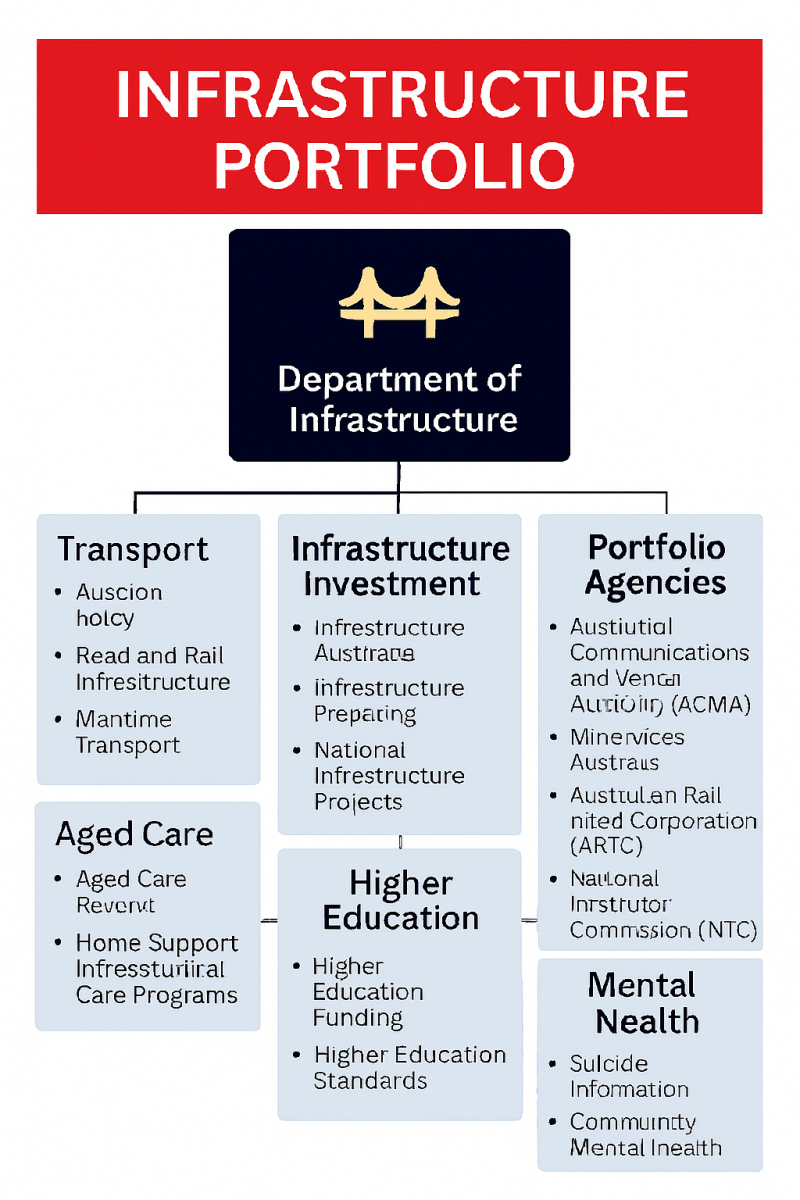
DEPARTMENT OF INFRASTRUCTURE & LAND DEVELOPMENT — OVERVIEW & MAJOR ISSUES
(Including Agriculture, Mining, Regional Development & National Projects)
Australia’s infrastructure and land‑use system spans multiple portfolios:
-
Infrastructure & Transport
-
Regional Development
-
Agriculture, Fisheries & Forestry
-
Industry, Science & Resources (Mining & Resources)
-
Planning, Land Use & Major Projects (shared across states)
Below is a unified overview of how these systems function — and where they consistently fail.

National Infrastructure & Transport
What it covers
-
National transport networks (roads, rail, ports, airports)
-
Infrastructure Australia (advice, planning, project assessment)
-
Urban planning & major project coordination
-
Freight, logistics & supply chain policy
Major issues
-
Chronic cost blowouts on major projects (tunnels, rail, highways).
-
Political pork‑barreling in project selection.
-
Slow approvals and planning delays across jurisdictions.
-
Fragmented national freight strategy causing inefficiency and high costs.
-
Aging regional infrastructure — roads, bridges, rail lines underfunded.
-
Lack of long‑term national planning beyond election cycles.

Land Development & Planning
What it covers
-
Urban development & housing supply
-
Zoning, land release, and density planning (state‑led but federally influenced)
-
Infrastructure‑led development (transport, utilities, services)
-
Regional growth strategies
Major issues
-
Planning bottlenecks slowing housing and industrial development.
-
Inconsistent state planning laws creating uncertainty for investors.
-
Infrastructure lag behind population growth.
-
Land banking by major developers restricting supply.
-
Poor coordination between federal funding and state land‑use decisions.
-
High construction costs due to labour shortages and regulatory complexity.

Agriculture, Fisheries & Forestry
What it covers
-
Farm productivity & biosecurity
-
Water access & irrigation
-
Export markets & trade access
-
Regional industry development
-
Natural resource management
Major issues
-
Biosecurity vulnerabilities (foot‑and‑mouth, varroa mite, lumpy skin disease).
-
Water insecurity and over‑extraction in key agricultural regions.
-
High input costs (fuel, fertiliser, labour).
-
Market concentration in supermarkets and processors squeezing farmers.
-
Labour shortages due to visa delays and seasonal worker gaps.
-
Slow adoption of modern infrastructure (storage, transport, digital connectivity).

.Mining, Resources & Critical Minerals
What it covers
-
Mining approvals & environmental assessments
-
Critical minerals strategy (lithium, rare earths, nickel, cobalt)
-
Gas and petroleum regulation
-
Resource royalties & export policy
-
Mine rehabilitation and environmental compliance
Major issues
-
Slow, complex approvals delaying major projects.
-
Regulatory overlap between federal and state agencies.
-
Critical minerals processing underdeveloped — Australia exports raw ore instead of value‑added products.
-
Environmental compliance gaps and inconsistent rehabilitation standards.
-
Gas market volatility and weak domestic reservation.
-
Foreign ownership concerns in strategic resource sectors.

Regional Development & Connectivity
What it covers
-
Regional infrastructure funding
-
Telecommunications & digital connectivity
-
Regional jobs, industry diversification, and population strategies
-
Disaster resilience and recovery
Major issues
-
Uneven regional investment — some areas thrive, others stagnate.
-
Poor digital connectivity in rural and remote areas.
-
Skills shortages across agriculture, mining, construction, and services.
-
Disaster recovery delays and inconsistent funding.
-
Lack of long‑term regional planning tied to industry and population needs.

National Supply Chains & Logistics
What it covers
-
Freight corridors
-
Ports and intermodal hubs
-
Heavy vehicle regulation
-
National supply chain resilience
Major issues
-
Port congestion and inefficiency raising costs for exporters.
-
Aging freight rail limiting competitiveness.
-
High transport costs for regional producers.
-
Weak national coordination on supply chain resilience.
-
Over‑reliance on foreign shipping and limited domestic capacity.
THE CORE PROBLEM FRAME
Across infrastructure, land development, agriculture, and mining, Australia faces the same structural failures:
-
Slow, fragmented approvals
-
Weak national coordination
-
Short‑term political decision‑making
-
Underinvestment in regional and enabling infrastructure
-
Regulatory overlap between states and the Commonwealth
-
Lack of sovereign capability in critical industries
These failures drive up costs, slow development, weaken competitiveness, and undermine national resilience.
Australians Unified overview on change
AUSTRALIANS UNIFIED — ONE‑PAGE POLICY BRIEF
Infrastructure, Land Development, Agriculture & Mining
Australia’s prosperity depends on the systems that build our cities, power our industries, feed our people, and connect our regions. But today, these systems are slow, fragmented, and weakened by short‑term politics. Australians Unified stands for rebuilding the foundations of national development.
1. NATIONAL INFRASTRUCTURE & TRANSPORT
The Issues
-
Major projects plagued by cost blowouts and delays.
-
Political pork‑barrelling distorts project selection.
-
Fragmented planning across states and the Commonwealth.
-
Aging regional infrastructure — roads, bridges, rail lines falling behind demand.
-
Weak national freight strategy, raising costs for exporters and consumers.
Australians Unified Direction
-
Independent, transparent project selection.
-
Long‑term national infrastructure planning beyond election cycles.
-
Modern freight corridors and upgraded regional transport networks.
2. LAND DEVELOPMENT & HOUSING SUPPLY
The Issues
-
Planning bottlenecks slow housing and industrial development.
-
Inconsistent state zoning laws create uncertainty.
-
Infrastructure lag behind population growth.
-
Land banking restricts supply and inflates prices.
-
High construction costs due to labour shortages and regulatory complexity.
Australians Unified Direction
-
Streamlined planning and coordinated land release.
-
Infrastructure‑led development to support housing and industry.
-
National standards to reduce delays and improve certainty.
3. AGRICULTURE, FISHERIES & FORESTRY
The Issues
-
Biosecurity vulnerabilities threaten national food security.
-
Water insecurity and over‑extraction in key regions.
-
Rising input costs: fuel, fertiliser, labour.
-
Market concentration in supermarkets and processors squeezes farmers.
-
Labour shortages due to visa delays and seasonal worker gaps.
-
Poor regional connectivity and outdated farm infrastructure.
Australians Unified Direction
-
Stronger biosecurity and modern water management.
-
Fairer markets for farmers and regional producers.
-
Investment in regional infrastructure, digital connectivity, and workforce supply.
4. MINING, RESOURCES & CRITICAL MINERALS
The Issues
-
Slow, complex approvals delaying major projects.
-
Overlapping federal/state regulation.
-
Australia exports raw minerals instead of value‑added products.
-
Environmental compliance gaps and inconsistent rehabilitation standards.
-
Gas market volatility and weak domestic reservation.
-
Foreign ownership concerns in strategic resource sectors.
Australians Unified Direction
-
Faster, clearer approvals with strong environmental safeguards.
-
Build sovereign processing capacity for critical minerals.
-
Strengthen domestic gas reservation and resource security.
-
Enforce consistent mine rehabilitation standards.
5. REGIONAL DEVELOPMENT & SUPPLY CHAINS
The Issues
-
Uneven regional investment — some regions thrive, others decline.
-
Poor digital connectivity in rural and remote areas.
-
Skills shortages across agriculture, mining, construction, and services.
-
Port congestion and aging freight rail raise export costs.
-
Disaster recovery funding slow and inconsistent.
Australians Unified Direction
-
Targeted regional investment tied to industry and population needs.
-
Modern ports, freight rail, and intermodal hubs.
-
Stronger supply chain resilience and domestic capability.
THE CORE MESSAGE
Australia’s development system is slow, fragmented, and reactive. Australians Unified will deliver clear approvals, strong national planning, modern infrastructure, regional investment, and sovereign capability across agriculture, mining, and industry.
A nation that builds — a nation that grows — a nation that works.