🏛 Home Affairs Australia
Gold Standard Portfolio Breakdown
Federal Government | Borders, Citizenship, National Security & Community Resilience
Federal Portfolio: Home Affairs Services
Primary Pillar: 🛡 Sovereignty
Supporting Pillars: ⚖ Accountability • 🤝 Unity • 🚀 Future Australia • 💰 Prosperity
🎯 National Mission
✅ Protect Australia's sovereignty
✅ Secure Australia's borders
✅ Protect critical infrastructure
✅ Maintain national resilience
✅ Support lawful migration
✅ Strengthen citizenship
✅ Combat foreign interference
✅ Protect communities from emerging threats
✅ Coordinate emergency preparedness
✅ Strengthen national unity
Home Affairs service portfolio
Explore the core Home Affairs service areas that help protect Australia’s sovereignty, safeguard communities and strengthen national resilience. This portfolio connects border and immigration services, national security, cyber security, emergency management, and community and citizenship programs.

Border, immigration and citizenship
Deliver lawful migration, secure border management and inclusive citizenship pathways through immigration, citizenship, visa processing, border protection, customs enforcement, migration integrity, social cohesion, community safety, multicultural affairs and national identity programs.
Outcome: Secure borders, a trusted migration system, strong citizenship pathways, community participation and national unity.

National security services
Coordinate national action on counter-terrorism, counter-extremism, foreign interference protection, security coordination and intelligence integration to defend Australia’s people, institutions and sovereignty.
Outcome: National safety, strategic security and sovereignty protection.

Cyber security services
Strengthen Australia’s digital security through national cyber security policy, critical infrastructure protection, cyber resilience, digital identity protection and national cyber readiness.
Outcome: A secure digital Australia and stronger cyber defence.

Emergency management services
Lead coordinated disaster preparedness, national crisis management, recovery coordination, community resilience and national preparedness for emergencies affecting Australian communities.
Outcome: Faster response, stronger recovery and resilient communities.

Core reform architecture and operational alignment
Detailed breakdown of key legislative foundations, modern operational platforms, whole-of-government integration, and sovereign security mandates under the Australians Unified policy framework.
⚖ Legislative framework
Current acts & authorities:
- ✅ Migration Act 1958
- ✅ Australian Citizenship Act 2007
- ✅ Border Force Act 2015
- ✅ Security of Critical Infrastructure Act
- ✅ Emergency management frameworks
- ✅ Cyber security legislation
- ✅ Counter-terrorism frameworks
🇦🇺 Home Affairs Operations Centre
Australians Unified reform platforms:
- ✅ National border dashboard
- ✅ National readiness dashboard
- ✅ Immigration intelligence platform
- ✅ Emergency coordination platform
- ✅ Community resilience dashboard
- ✅ Critical infrastructure monitoring platform
🔗 GovOps integration model
Connected operational portfolio:
- ✅ Immigration & border force
- ✅ Emergency management
- ✅ Cyber security
- ✅ Critical infrastructure protection
- ✅ Community safety
- ✅ National intelligence fusion
Unified under a singular, efficient operational model.
🛡 National sovereignty framework
Key security responsibilities & risks:
- ✅ Border security & integrity
- ✅ Biosecurity support operations
- ✅ Identity security & verification
- ✅ Cyber & critical systems defense
- ✅ Infrastructure protection
- ✅ Social stability & community cohesion
- ✅ Strategic readiness across key risks
Home Affairs services: strengths, risks and reform roadmap
This Australians Unified framework maps the Department of Home Affairs service portfolio across border security, immigration and citizenship, cyber resilience, emergency management, critical infrastructure protection and community cohesion. It identifies existing strengths, operational issues requiring reform, priority risks and investments, measurable KPI targets, and a four-phase pathway towards a world-class civil security system by 2037.

Border security strengths
Home Affairs brings customs, immigration enforcement and maritime patrol together through an integrated border security role. Its national mandate operates across air, sea and land borders with legislative authority, supported by experienced intelligence, enforcement and maritime officers. Regional partnerships with Indonesia, Pacific nations and Five Eyes partners strengthen intelligence sharing and coordinated action.

Operational issues to address
Reform must address ageing patrol vessels, aircraft and equipment failures that reduce operational capacity; staff and crew shortages that limit patrols and rapid response; and corruption risks, including insider drug-smuggling and bribery cases. Scandals and operational failures can damage public trust, while a large workforce dispersed across jurisdictions creates difficult oversight challenges.
National risks and investment priorities
Priority risks include foreign interference, cyber attacks, illegal migration, organised crime, extremism, infrastructure disruption and supply-chain vulnerabilities. Investment priorities are border technology, AI visa processing, national digital identity, biometric border systems, cyber defence platforms, emergency coordination systems, community resilience programs, critical infrastructure security and national readiness systems.
KPI dashboard and 2028–2037 roadmap
Gold Standard KPI targets — 2032 / 2037: Border Integrity Index 140 / 220; Visa Processing Efficiency 150 / 250; Citizenship Processing Efficiency 145 / 230; Cyber Resilience Index 150 / 240; Emergency Preparedness Index 145 / 230; Critical Infrastructure Protection Index 150 / 250; Community Cohesion Index 130 / 190; National Readiness Index 145 / 240.
Phase 1 (2028–2030): national Home Affairs dashboard, AI visa processing, unified border data platform and emergency data integration — real-time operational visibility.
Phase 2 (2031–2033): national border intelligence centre, critical infrastructure monitoring, cyber resilience network and community preparedness programs — integrated national security.
Phase 3 (2034–2035): predictive threat analysis, AI threat detection, national readiness framework and advanced identity systems — proactive threat prevention.
Phase 4 (2036–2037): fully integrated Home Affairs platform, whole-of-government security dashboard, sovereignty monitoring framework and national resilience network — a world-class civil security system.
. Immigration and Citizenship Division
Focuses on countering espionage, foreign interference, and protecting national security. Manages visas, migration pathways, and citizenship processes, balancing national security with humanitarian and economic priorities
-
Policy volatility: Frequent legislative changes create uncertainty for migrants and administrators.
-
Human rights concerns: New migration bills criticised for undermining refugee protections.
-
Border control pressures: Boat arrivals spark political controversy and strain detection systems.
-
Processing delays: Visa backlogs and citizenship application bottlenecks persist.
The way forward
Digital transformation, policy stability, human rights safeguards and educational programs that assist migration pathways that should be a focus, demographically strategic targeting the right people for Australian cultural assimilation


Multicultural Affairs Division
Promotes social cohesion and multicultural policies. Promotes social cohesion and inclusion, ensuring diverse communities are engaged and supported within Australia’s national framework.
-
Social cohesion risks: Rising xenophobia and political exploitation of cultural divides.
-
Integration challenges: Ensuring diverse communities feel included while avoiding segregation.
-
Public debate volatility: Multiculturalism often politicised, undermining long-term policy stability.
-
Youth radicalisation concerns: Isolated incidents in schools spark fears of cultural breakdow
The way forward
-
Youth Engagement Initiatives: Targeted programs to prevent isolation and radicalisation.
-
Cohesion Campaigns: Promote shared national identity alongside cultural diversity.
-
Policy Insulation: Establish bipartisan frameworks to shield multicultural policy from short‑term politics.
-
Community Partnerships: Expand collaboration with local councils and NGO
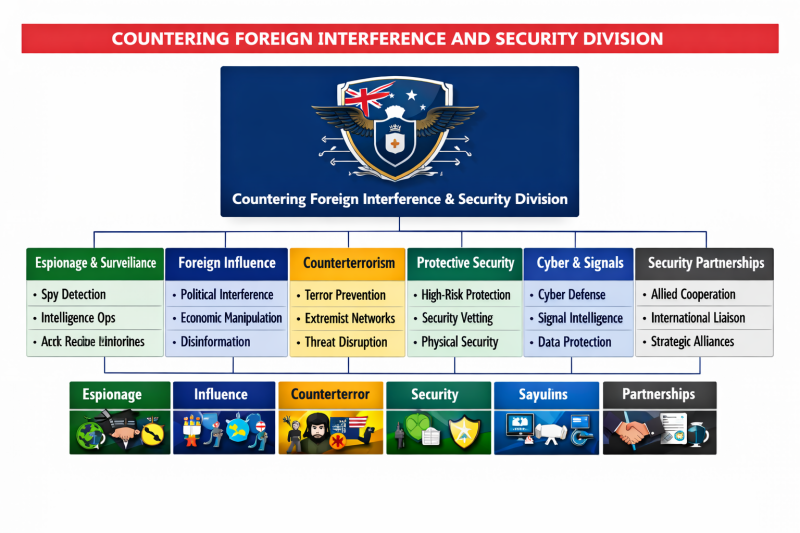
Countering Foreign Interference and Security Division
Focuses on safeguarding Australia’s sovereignty by detecting and preventing covert influence, espionage, and hostile state activities.Focuses on countering espionage, foreign interference, and protecting national security.
-
Extreme threat levels: Espionage and interference at “unprecedented” intensity.
-
Community intimidation: Foreign actors harass diaspora groups and dissidents.
-
Disinformation campaigns: Attempts to sow division and undermine trust in institutions.
-
Critical infrastructure vulnerability: Energy, ports, and communications increasingly targeted
The way forward
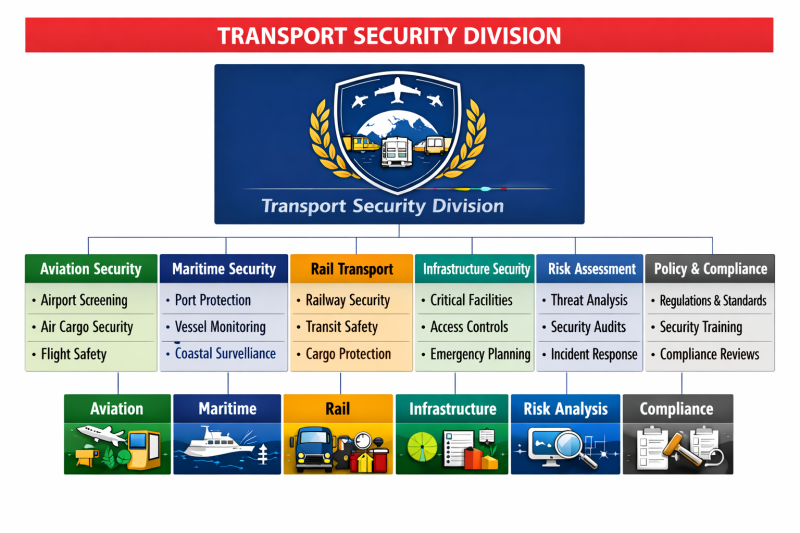
Transport Security Division
-
Oversees aviation, maritime, and other transport-related security measures to protect supply chains and critical movement systems.Evolving threat landscape:
-
Terrorism persists, but cyber and “operational interference” risks are growing.
-
Legislative lag: Frameworks built in early 2000s struggle to address modern hazards.
-
Economic vulnerability: Disruption to aviation and maritime systems directly impacts trade and national prosperity.
-
All-hazards approach: Need to broaden beyond terrorism to include sabotage, cyberattacks, and supply chain risks.
The way forward
-
Legislative Modernisation: Update laws to cover cyber threats and supply chain risks.
-
All‑Hazards Framework: Broaden focus beyond terrorism to include sabotage, cyberattacks, and natural disruptions.
-
Industry Partnerships: Co‑develop resilience plans with airlines, ports, and logistics firms.
-
Technology Deployment: Introduce biometric screening and AI‑enabled cargo monitoring.
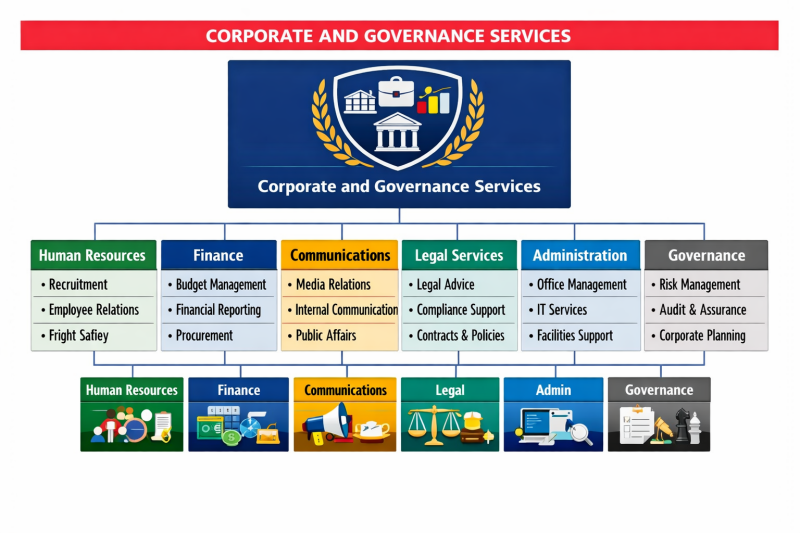
Corporate and Governance Services
-
Provides internal corporate services including finance, HR, legal, and governance support.
Corporate and Governance Services
Provides internal support—finance, HR, compliance, and governance—ensuring the Department runs efficiently and transparently.
-
Contract integrity issues: Past scandals over procurement and corruption risks (e.g., Nauru contracts).Governance complexity:
-
Balancing transparency, accountability, and efficiency in a sprawling department.
-
AI and automation risks: New governance frameworks for automation/AI must avoid bias and ensure compliance.
-
Resource allocation: Ensuring corporate services keep pace with frontline divisions’ expanding mandates
The way forward
-
Procurement Integrity Reforms: Independent audits and transparent tendering processes.
-
AI Governance Frameworks: Ethical oversight for automation in decision‑making.
-
Resource Alignment: Scale corporate services to match frontline divisions’ expanding mandates.
-
Transparency Measures: Publish governance scorecards and compliance reports.
Overview of the Department of Home Affairs
Development opportunities for a brighter future
Australia faces unprecedented challenges that demand modernised border readiness. Key strategic opportunities include:
- Fleet renewal programs: Substantial investment in new offshore patrol vessels, surveillance aircraft, and modern detection systems.
- Digital transformation: Harnessing artificial intelligence, autonomous drones, and persistent satellite monitoring to expand border surveillance.
- Regional cooperation: Expanding joint maritime patrols and real-time intelligence networks across ASEAN and Pacific partners.
- Public trust rebuilding: Transparent administration, structural integrity measures, and anti-corruption safeguards to restore institutional confidence.
- Expanded mandate: Integrating automated cyber-border capabilities to protect vital supply chains as cross-border digital trade expands.
Threats requiring immediate action
The Australian Border Force operates in an intense threat climate requiring coordinated national deterrence:
- People smuggling networks: Persistent maritime exploitation originating across Southeast Asia and Indonesia.
- Surging illegal fishing: Unauthorised incursions at an 18-year high, severely stretching frontline patrol capacity.
- Drug trafficking syndicates: Transnational organised crime cartels targeting operational blind spots and insider integrity.
- Hostile foreign interference: Covert state actors seeking to exploit supply chains and vulnerable border touchpoints.
- Economic disruptions: Border enforcement vulnerabilities that risk maritime flow, trade compliance, and national continuity.
Summary: While integrated agencies and regional alliances form a strong foundation, readiness deficits and staffing limits create acute vulnerabilities. By committing to autonomous technology and whole-of-government integrity, Australia can embed long-term resilience into its sovereign security posture.
Based on the strategic roadmap, funding scenarios, and program gaps we've explored, here’s a list of key Australian government departments and agencies that would directly benefit from the proposed reforms and investments across the Australian Border Force (ABF) and the Department of Home Affairs:
🏛️ Departments That Would Benefit
1. Department of Home Affairs
-
Primary beneficiary across all domains: border security, immigration, cyber, emergency management, multicultural affairs, and transport security.
-
Gains from integrated platforms, upgraded surveillance, resilience infrastructure, and workforce pipelines.
2. Australian Border Force (ABF)
-
Direct uplift in operational capability, fleet renewal, autonomous surveillance, and integrity systems.
-
Benefits from workforce expansion, ethics reform, and Smart Border integration.
3. National Emergency Management Agency (NEMA)
-
Gains from climate-resilient infrastructure, predictive modelling, and emergency leadership training.
-
Strengthens national disaster response and recovery systems.
4. Australian Cyber Security Centre (ACSC)
-
Benefits from quantum-safe encryption, AI-driven threat detection, and cybersecurity academy graduates.
-
Supports critical infrastructure protection and national cyber resilience.
5. Department of Infrastructure, Transport, Regional Development and Communications
-
Gains from transport security innovation labs, biometric cargo systems, and hardened supply chains.
-
Enhances aviation and maritime resilience against sabotage and cyber threats.
6. Department of Education
-
Benefits from new education pipelines: cybersecurity academy, multicultural resilience curriculum, AI ethics training.
-
Supports national skills formation and civic cohesion.
7. Attorney-General’s Department
-
Gains from counter-foreign interference programs, diaspora protection, and legal frameworks for AI governance.
-
Strengthens national security legislation and oversight.
8. Department of Finance
-
Benefits from transparent procurement reforms, AI-enabled governance, and performance-linked funding models.
-
Improves fiscal discipline and public trust in capital programs.
9. Department of the Prime Minister and Cabinet (PM&C)
-
Strategic oversight of national resilience, sovereignty, and cross-portfolio coordination.
-
Gains from scenario modelling, interagency integration, and global leadership positioning.
🧠 Summary
These departments would benefit through:
-
Capability uplift (ABF, ACSC, NEMA)
-
Resilience and infrastructure (Home Affairs, Transport, PM&C)
-
Education and workforce (Education, Finance)
-
Governance and integrity (Attorney-General’s, Finance, Home Affairs)
The Department of Defence stands to benefit significantly from the strategic upgrades proposed across Home Affairs and ABF—especially in areas of border surveillance, cyber resilience, emergency coordination, and national deterrence.
🛡️ Key Government Departments That Would Benefit
1. Department of Home Affairs
-
Central beneficiary across all domains: border security, immigration, cyber, emergency management, multicultural affairs, and transport security.
-
Gains from integrated platforms, upgraded surveillance, resilience infrastructure, and workforce pipelines.
2. Australian Border Force (ABF)
-
Direct uplift in operational capability, fleet renewal, autonomous surveillance, and integrity systems.
-
Benefits from workforce expansion, ethics reform, and Smart Border integration.
3. Department of Defence
-
Strategic alignment with National Defence Strategy (2024):
-
Gains from autonomous border surveillance and maritime domain awareness.
-
Benefits from hardened logistics and transport infrastructure supporting force projection.
-
Enhanced interoperability with ABF and Home Affairs in countering foreign interference and hybrid threats.
-
Shared cyber resilience frameworks and quantum-safe systems bolster Defence’s digital posture.
-
Emergency coordination with NEMA supports Defence’s domestic support operations during crises.
-
4. National Emergency Management Agency (NEMA)
-
Gains from climate-resilient infrastructure, predictive modelling, and emergency leadership training.
-
Strengthens national disaster response and recovery systems.
5. Australian Cyber Security Centre (ACSC)
-
Benefits from quantum-safe encryption, AI-driven threat detection, and cybersecurity academy graduates.
-
Supports critical infrastructure protection and national cyber resilience.
6. Department of Infrastructure, Transport, Regional Development and Communications
-
Gains from transport security innovation labs, biometric cargo systems, and hardened supply chains.
-
Enhances aviation and maritime resilience against sabotage and cyber threats.
7. Department of Education
-
Benefits from new education pipelines: cybersecurity academy, multicultural resilience curriculum, AI ethics training.
-
Supports national skills formation and civic cohesion.
8. Attorney-General’s Department
-
Gains from counter-foreign interference programs, diaspora protection, and legal frameworks for AI governance.
-
Strengthens national security legislation and oversight.
9. Department of Finance
-
Benefits from transparent procurement reforms, AI-enabled governance, and performance-linked funding models.
-
Improves fiscal discipline and public trust in capital programs.
10. Department of the Prime Minister and Cabinet (PM&C)
-
Strategic oversight of national resilience, sovereignty, and cross-portfolio coordination.
-
Gains from scenario modelling, interagency integration, and global leadership positioning.
🔗 Defence–Home Affairs Synergies
-
Joint maritime surveillance: Autonomous ABF platforms complement Defence ISR assets.
-
Cyber defence integration: Shared threat intelligence and quantum-safe infrastructure.
-
Emergency coordination: Defence logistics and NEMA response systems co-deployed.
-
Border deterrence: ABF upgrades reduce Defence burden in grey-zone operations.
-
Resilience posture: Climate-proofed infrastructure supports Defence readiness and continuity.


What is currently underway by the government
Home Affairs & ABF
-
Corporate Plan: Outcome-based delivery across border, immigration, cyber, and resilience.
-
ABF Strategy & Border Modernisation: Covers traveller and cargo systems, trade frameworks, SmartGate, and Trusted Trader.
-
Operation Sovereign Borders (OSB): Maritime deterrence and multi-agency coordination.
🔹 Whole-of-Government
-
PM&C Strategic Priorities: Enables interagency coordination and scenario planning.
-
DFAT Regional Strategy: Supports partnerships for joint patrols, cyber norms, and supply chain resilience.
What Still Needs to Be Implemented
🏛 Governance
-
National Resilience Implementation Office (within PM&C)
-
Strategic Investment Board (Defence, Home Affairs, Finance, ACSC, NEMA)
-
Legislative reform for border surveillance, cyber mandates, and AI governance
💰 Funding
-
Multi-year capital envelopes for fleet, surveillance, and infrastructure
-
Strategic capability grants for education pipelines
-
Resilience bonds or sovereign infrastructure financing
🛠 Infrastructure
-
ABF fleet renewal and autonomous surveillance systems
-
Integrated border platforms (customs, immigration, cargo, intelligence)
-
Quantum-safe encryption and sovereign cloud infrastructure
-
Climate-hardened ports, fuel redundancy, and multi-hazard logistics
🎓 Education
-
Cybersecurity Academy (certificates to postgrad, industry placement)
-
Emergency Management Leadership Program (scenario-based training)
-
Multicultural Resilience Curriculum (civic identity and cohesion)
-
AI Governance & Ethics Training (mandatory for policy and procurement staff)
🔗 Coordination
-
Defence–Home Affairs joint capability planning
-
Industry and university partnerships for R&D and training
-
Regional cooperation via DFAT for patrols, cyber defence, and resilience
Cross Agency Capabilities Benefits
The scenario stress test matrix is ready — click/open the card above to view and download it. It maps how strategic programs across ABF and Home Affairs respond under four threat environments:
-
Cyber escalation
-
Climate disaster surge
-
Foreign interference
-
Regional instability
Each department is linked to programs that strengthen deterrence, resilience, and sovereignty under pressure — from autonomous surveillance and quantum-safe systems to diaspora protection and emergency coordination.
Australia needs a coordinated, multi-agency transformation framework. Here’s a structured breakdown of what must be implemented:
Governance & Oversight
-
Establish a National Resilience Implementation Office
-
Located within PM&C or Home Affairs
-
Oversees cross-agency delivery, funding alignment, and milestone tracking
-
Coordinates with Defence, Finance, and Infrastructure portfolios
-
-
Create a Strategic Investment Board
-
Includes Defence, ABF, ACSC, NEMA, Education, and Treasury
-
Reviews capital programs, risk-weighted ROI, and sovereign capability alignment
-
-
Legislative Modernisation
-
Update laws governing border surveillance, cyber mandates, and emergency powers
-
Embed AI governance and ethical automation frameworks
-
💰 2. Funding & Budget Integration
-
Secure multi-year capital envelopes
-
Tranche-based funding for fleet renewal, autonomous systems, and infrastructure resilience
-
Align with Portfolio Budget Statements (PBS) and GDP allocation targets (e.g. 0.03–0.05%)
-
-
Launch Strategic Capability Grants
-
Competitive funding for cyber academies, multicultural curriculum, and emergency leadership programs
-
Co-funded by Commonwealth, universities, and industry
-
-
Introduce Resilience Bonds or Sovereign Infrastructure Financing
-
For climate-proofed ports, fuel redundancy, and transport security labs
-
🛠️ 3. Program Delivery & Infrastructure
-
ABF Fleet Renewal & Autonomy Program
-
Commission new vessels and aircraft
-
Develop unmanned surface vessels and AI-driven drones
-
Integrate with Defence ISR and maritime domain awareness
-
-
Integrated Border Technology Platform
-
Link customs, immigration, cargo, and intelligence systems
-
Expand SmartGate and Trusted Trader analytics
-
-
Quantum-Safe Cyber Infrastructure
-
Migrate critical systems to quantum-resistant encryption
-
Build sovereign cloud and data fabric
-
-
Climate Resilience Infrastructure
-
Harden ports, logistics hubs, and emergency shelters
-
Embed predictive hazard modelling via NEMA
-
🎓 4. Education & Workforce Pipelines
-
Cybersecurity Academy
-
National training pipeline with certificates to postgraduate levels
-
Industry rotations and government placements
-
-
Emergency Management Leadership Program
-
Scenario-based training across jurisdictions
-
Linked to NEMA and Defence support operations
-
-
Multicultural Resilience Curriculum
-
Youth-focused civic identity and cohesion modules
-
Delivered via schools and community partnerships
-
-
AI Governance & Ethics Training
-
Mandatory for policy, procurement, and corporate staff
-
Embedded in continuing education frameworks
-
🔗 5. Interagency Coordination & Strategic Partnerships
-
Defence–Home Affairs Joint Capability Planning
-
Align ABF surveillance and logistics upgrades with Defence readiness
-
Share cyber threat intelligence and resilience infrastructure
-
-
Industry & University Partnerships
-
Co-develop transport security labs, cyber academies, and AI ethics programs
-
Embed performance-linked funding and sovereign IP protections
-
-
Regional & Global Cooperation
-
Deepen ties with ASEAN, Pacific, and Five Eyes partners
-
Joint patrols, intelligence sharing, and cyber treaties
-
Phased implementation timeline for Home Affairs reform
A practical 10-year delivery pathway for Australians Unified to strengthen border integrity, cyber security, emergency readiness and national resilience. Each phase assigns clear lead portfolios across governance, funding, infrastructure, education and regional coordination, progressing towards sovereign capability by 2035.

Short term: 0–2 years
Stabilisation and governance setup
- Governance: Establish the National Resilience Implementation Office, led by PM&C; form a Strategic Investment Board led by Home Affairs, Defence and Finance; and begin legislative reform for cyber security, surveillance and AI ethics through the Attorney-General’s portfolio.
- Funding: Secure multi-year capital envelopes for fleet renewal and border platforms through Finance and Home Affairs, and launch Strategic Capability Grants for education pipelines through Education and Treasury.
- Infrastructure: Commence ABF fleet sustainment and ethics uplift; expand SmartGate and introduce digital triage systems through ABF and immigration services.
- Education and coordination: Design the Cybersecurity Academy and Emergency Leadership curriculum with Education and NEMA; initiate Defence–Home Affairs capability alignment; and engage DFAT on regional patrol and cyber cooperation.

Medium term: 2–5 years
Structural renewal and integration
- Governance: Embed responsible AI governance frameworks across portfolios, led jointly by PM&C and the Attorney-General’s Department.
- Funding: Expand resilience financing, including potential bonds for ports and logistics, led by Treasury and Infrastructure.
- Infrastructure: Commission ABF Fleet Renewal Tranche 1 with Defence and deploy integrated border platforms connecting customs, immigration and cargo systems through Home Affairs.
- Education: Launch the Cyber Academy and Emergency Leadership programs with Education and NEMA, while Education and Multicultural Affairs pilot a Multicultural Resilience Curriculum.
- Coordination: Operationalise regional cyber and supply-chain partnerships, led by DFAT and the Australian Cyber Security Centre.

Long term: 5–10 years
Sovereign capability and global leadership
- Governance and funding: Deliver AI-enabled governance and open-data platforms through Finance and PM&C, while maintaining capital funding for autonomous systems and climate-resilient infrastructure through Finance and Infrastructure.
- Infrastructure: Deploy autonomous ABF surveillance systems, including uncrewed aerial systems and vessels, with ABF and Defence; harden ports and logistics with Infrastructure and NEMA; and migrate critical systems to quantum-safe encryption and sovereign cloud through the Australian Cyber Security Centre and Defence.
- Education: Scale Cyber Academy and AI ethics training nationally through Education and PM&C, and institutionalise multicultural curriculum and civic identity frameworks with Multicultural Affairs.
- Coordination: Position Australia as a global leader in counter-interference and national resilience through DFAT and PM&C.

Outcome by 2035
A resilient, autonomous and sovereign national security system.
- Autonomous, resilient and sovereign border systems supported by renewed ABF capability, integrated data and ethical oversight.
- Quantum-secure infrastructure, sovereign cloud capability and a stronger global cyber posture.
- Integrated emergency management and climate resilience across ports, logistics networks and critical infrastructure.
- National education pipelines that sustain cyber, emergency leadership, AI ethics and community resilience capability.
- A coordinated whole-of-government model connecting Home Affairs, Defence, Finance, Education, NEMA, DFAT, Infrastructure and the Attorney-General’s portfolio.
Long-term corrective measures: 5–10 year roadmap
Australians Unified proposes a long-term Home Affairs roadmap that shifts Australia from reactive security to proactive national resilience. The roadmap embeds autonomous systems, quantum-safe infrastructure, climate-resilient communities, integrity, digital sovereignty and global leadership across every division.
Smart borders and migration
Australian Border Force: Deploy unmanned patrol vessels, AI-driven drones and satellite constellations for 24/7 surveillance; connect customs, immigration and intelligence through real-time digital platforms; deepen operational cooperation with ASEAN, Pacific and Five Eyes partners; embed integrity and transparency to reduce corruption risk; and build long-term career pathways with automation support to reduce fatigue in high-risk roles.
Immigration and Citizenship: Introduce biometric, AI-enabled Smart Borders to reduce human error, align long-term migration pathways with Australia’s innovation economy, expand globally recognised refugee resettlement, and provide secure blockchain-based digital identity for all Australians.

National resilience and transport
National Emergency Management Agency: Invest nationwide in flood-proof cities, fire-resistant housing and adaptive transport; use AI-enabled modelling to forecast disasters decades ahead; establish a National Resilience Grid linking energy, water and communications for rapid recovery; and professionalise a permanent Civil Defence Corps for large-scale emergencies.
Transport Security: Deploy AI-enabled cargo scanning, biometric travel and predictive risk modelling; harden logistics against sabotage, cyberattacks and climate disruption; shape international aviation and maritime security standards; and link transport security with cyber defence and emergency management systems.

Cyber security and counter-interference
Cyber Security Division: Achieve full quantum-resistant encryption across government and industry; deploy autonomous cyber systems that detect and neutralise threats in real time; lead international cyber treaties and cooperative defence; and secure Australian-owned cloud and data infrastructure to strengthen digital sovereignty.
Countering Foreign Interference: Build national awareness through education and civic life, use AI to detect covert influence networks, deliver long-term programs that help diaspora communities resist intimidation, and position Australia as a global hub for counter-interference expertise.

Cohesion, integrity and governance
Multicultural Affairs: Deliver a generational cohesion strategy that keeps second- and third-generation migrants engaged; balance diversity with a shared civic identity; position Australia as a model for multicultural resilience; and use digital engagement to connect communities and prevent isolation.
Corporate and Governance Services: Automate compliance, procurement and reporting with responsible AI; deliver transparency by design through open data for public oversight of Home Affairs operations; plan for automation and human–machine collaboration; and benchmark Home Affairs as a global model for governance integrity.
Frequently asked questions about Home Affairs services
Find clear answers regarding Australia's civil security portfolio, border integrity, immigration modernisations, and the long-term national reform roadmap.