Connecting federal, state and local government through sovereignty, prosperity, accountability and unity. Explore our comprehensive governance map to see how public administration serves everyday Australians across every level.
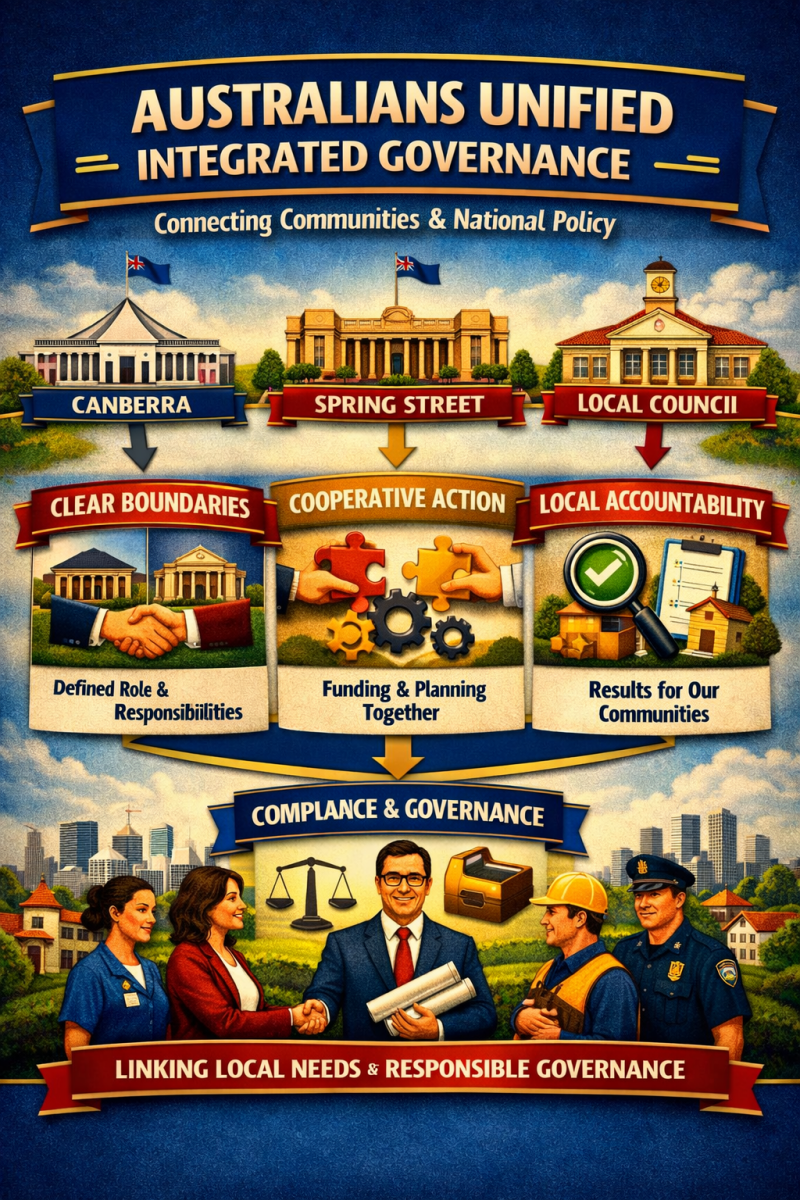
Australians Unified seeks to connect communities, councils, state governments and the Commonwealth through a coordinated governance framework focused on outcomes for Australians.
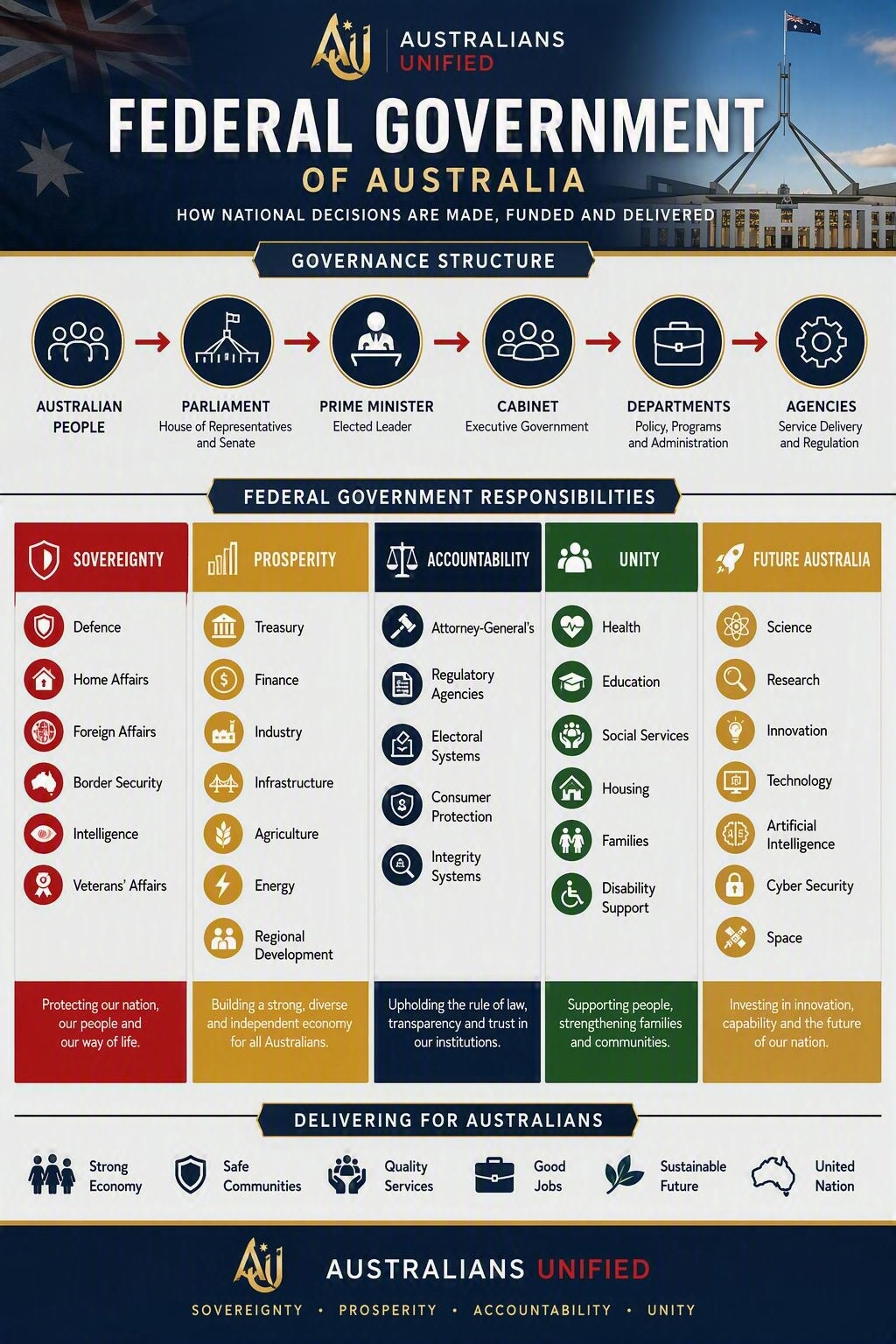
The Commonwealth government oversees national matters that affect all Australians. Key responsibilities include national defence, immigration, foreign affairs, international trade, currency, and federal taxation, ensuring national cohesion and sovereignty across borders.
Federal Government is responsible for matters that affect all Australians. It develops national laws, manages the economy, protects national security, and represents Australia internationally.
Key Responsibilities
✅ Defence & National Security
✅ Foreign Affairs & Trade
✅ Border Security & Immigration
✅ Taxation & National Revenue
✅ National Infrastructure
✅ Communications & Telecommunications
✅ Industry & Economic Development
✅ Agriculture & Biosecurity
✅ Medicare & National Health Funding
✅ Social Security & National Programs
Federal Government sets national direction, develops policy, and provides funding that supports state programs and local services across Australia.
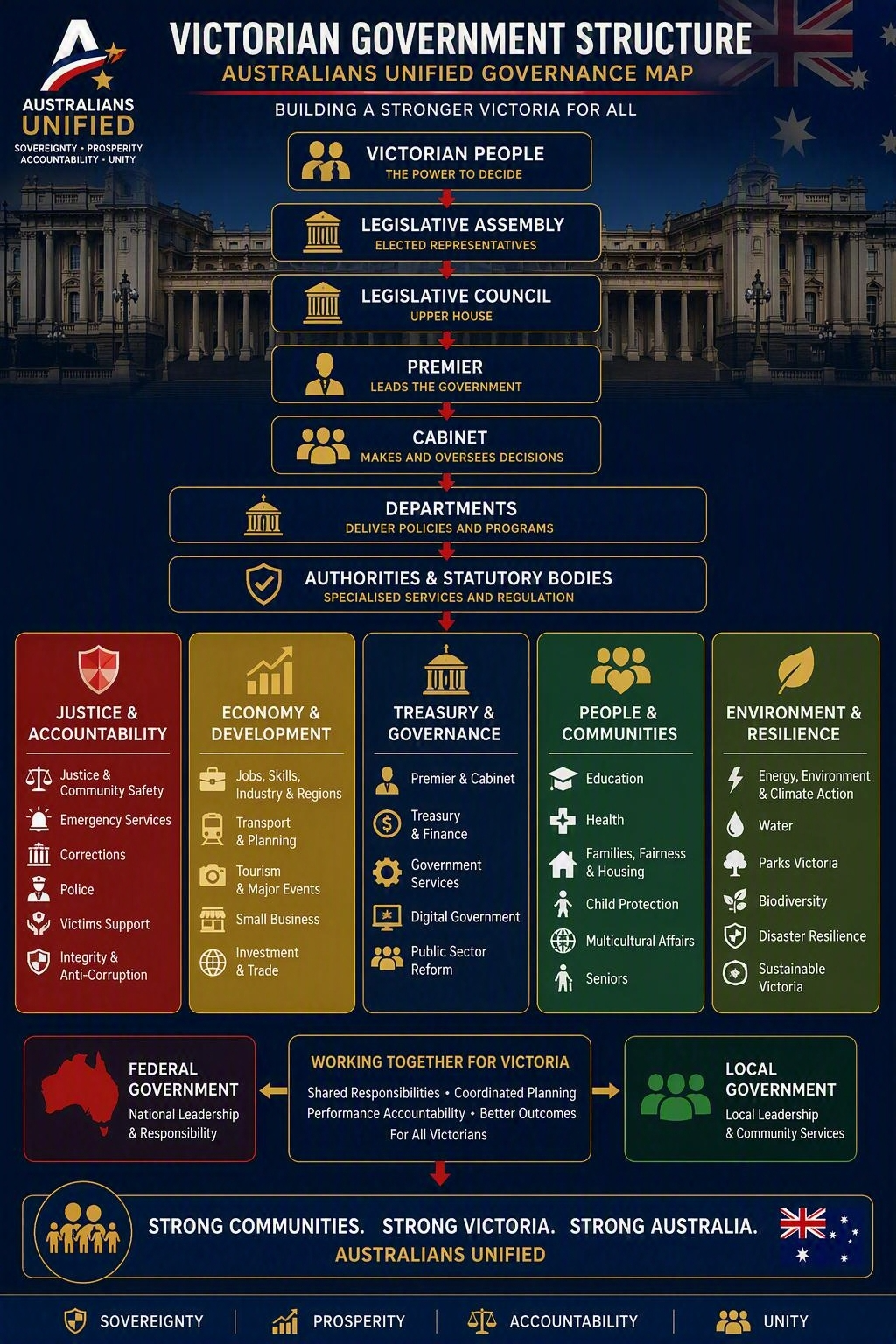
State Government delivers the essential services Australians rely on every day.
State Governments are responsible for major areas including health, education, housing, transport, justice, child protection, emergency services, and planning. They turn national policies into local programs and manage the departments that deliver services across the state.
Understanding State Government
State Government delivers the essential services Australians rely on every day. State Governments manage major public services, infrastructure and community programs throughout Victoria.
Key Responsibilities
✅ Health & Hospitals
✅ Schools & Education
✅ Housing & Communities
✅ Transport & Public Transport
✅ Justice & Community Safety
✅ Child Protection
✅ Emergency Services
✅ Environment & Water
✅ Planning & Development
✅ TAFE & Skills Training
State Government is the bridge between national policy and local delivery, coordinating services, infrastructure, and community outcomes across Victoria.
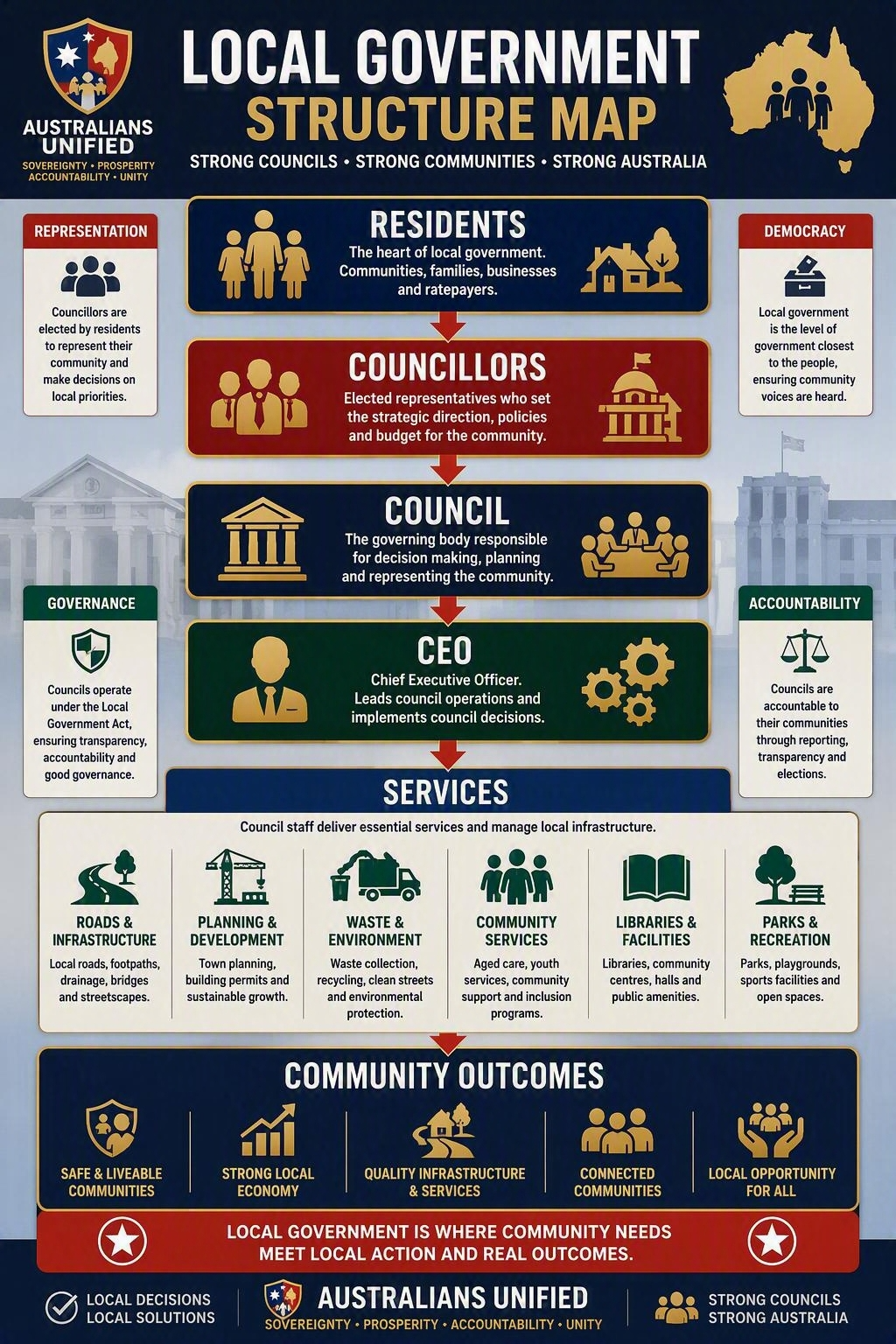
Local government represents the foundational tier closest to citizens. Councils oversee town planning, local road upkeep, public libraries, waste collection, parks, and neighbourhood community facilities, keeping our suburbs and regional towns thriving.
Understanding Local Government
Local Government is the level of government closest to the community. Councillors represent residents, make local decisions, oversee budgets, and guide the delivery of services through council administration and staff.
Key Responsibilities
✅ Local Roads & Infrastructure
✅ Planning & Development
✅ Waste & Recycling
✅ Parks & Recreation
✅ Libraries & Community Facilities
✅ Community Programs & Events
✅ Local Economic Development
Local Government is where community needs meet local action and real outcomes.
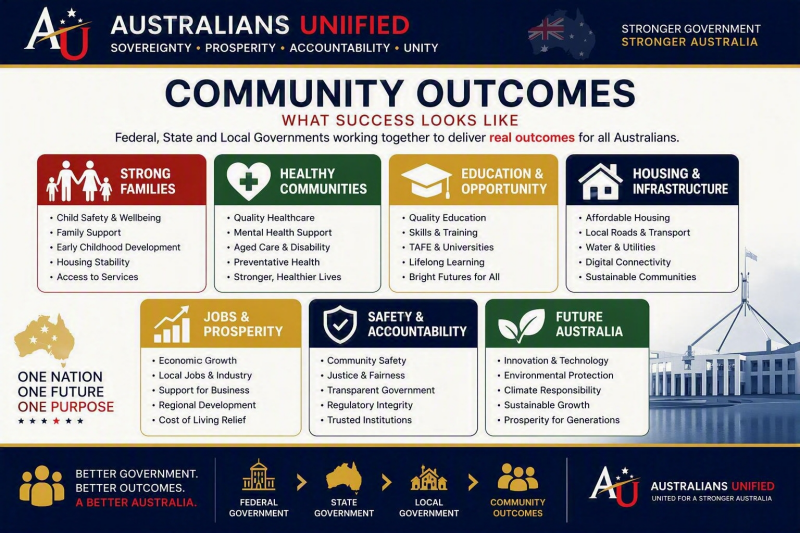
COMMUNITY OUTCOMES
Turning Decisions into Results
Every level of government plays a role in shaping the lives of Australians. Federal, State and Local Governments create laws, fund services, build infrastructure and support communities.
Community outcomes are the real-world results experienced by individuals, families, businesses and local communities.
👨👩👧 Strong Families
✅ Child Safety
✅ Family Support
✅ Early Childhood Development
✅ Housing Stability
✅ Access to Education
Outcome: Families have the support, safety and opportunities they need to thrive.
🏥 Healthy Communities
✅ Hospitals
✅ Mental Health Services
✅ Preventative Healthcare
✅ Disability Support
✅ Aged Care
Outcome: Australians live healthier, longer and more productive lives.
🎓 Education & Opportunity
✅ Schools
✅ TAFE
✅ Universities
✅ Skills Training
✅ Workforce Development
Outcome: People gain the knowledge and skills needed for lifelong success.
🏠 Housing & Infrastructure
✅ Housing Supply
✅ Local Roads
✅ Public Transport
✅ Community Facilities
✅ Digital Connectivity
Outcome: Communities are connected, affordable, and capable of supporting future growth.
💼 Jobs & Prosperity
✅ Economic Growth
✅ Industry Development
✅ Small Business Support
✅ Regional Development
✅ Investment
Outcome: More jobs, stronger local economies and greater financial security.
⚖ Safety & Accountability
✅ Police
✅ Emergency Services
✅ Justice Systems
✅ Regulatory Protection
✅ Transparency
Outcome: Communities feel safe, protected, and confident in public institutions.
🌱 Sustainable Future
✅ Environmental Protection
✅ Water Security
✅ Energy & Fuel Security
✅ Innovation
✅ New Technologies
Outcome: Future generations inherit a stronger, more sustainable Australia.