
Unified Australia has created an FAQ section to help you understand the key policy's to being a sovereign country that builds a future Australian no just for know but a 50 to 100 year legacy that ensure the future of country build for it people by it people and has the fundamental strategy to fully support itself and its idealisms that are based on a democratic free Australia that bullet proofs itself from debt and globalization but plays a key part in futureproofing the region and world and culture.
How does local government candidates work with federal and state governments
🏛️ How Local Government Fits Within Australia’s System
Local councils are the third tier of government, operating under state legislation but often implementing programs funded or influenced by the Commonwealth. Councillors and candidates must understand how these layers interact:
-
Federal Government (Canberra) — sets national policy and provides funding through grants and programs such as infrastructure, housing, and community development.
-
State Government (Victoria) — oversees councils via the Local Government Act 2020, determines planning frameworks, and allocates state grants.
-
Local Government (Councils) — delivers services like waste management, local roads, libraries, and community programs, often co‑funded by state or federal sources.

⚙️ How Local Candidates Collaborate Across Levels
-
Policy Alignment — Candidates and councillors align local priorities with state and federal agendas (e.g., housing, transport, environment).
-
Funding Partnerships — Councils apply for Commonwealth and state grants; elected councillors advocate for local projects within these frameworks.
-
Representation Channels — Councillors liaise with MPs and Ministers to influence regional decisions and secure support for local initiatives.
-
Compliance & Governance — Councillors must follow the Local Government Act 2020 and maintain separation between council duties and political campaigning.
-
Transparency & Accountability — Councillors standing for state or federal office must declare candidacy, seek leave of absence, and avoid using council resources for campaigns

📋 Eligibility & Conduct
According to the Victorian Electoral Commission, local candidates must:
-
Complete mandatory candidate training before nomination.
-
Be Australian citizens aged 18 or older and enrolled in the council area.
-
Not be members of state or federal parliament or employed by MPs.
-
Disclose campaign donations and comply with authorisation rules for electoral material

🔍 Practical Coordination Example
A local councillor advocating for a new transport corridor might:
-
Work with state departments (Transport & Planning) for design and approvals.
-
Seek federal infrastructure grants through programs like the Building Better Regions Fund.
-
Engage local residents to ensure community priorities align with higher‑level policy goals.

🧭 Australians Unified Perspective
Australians Unified supports integrated governance, where local representatives act as connectors between community needs and national policy. The movement emphasises:
-
Clear boundaries between tiers of government.
-
Cooperative funding and planning.
-
Accountability in how federal and state decisions translate into local outcomes.
How Do State & Federal governments work together
We offer a range of specialized services tailored to meet your individual needs. Our approach is focused on understanding and responding to what you require, providing effective and practical solutions.

What is the role of Victoria’s Parliament?
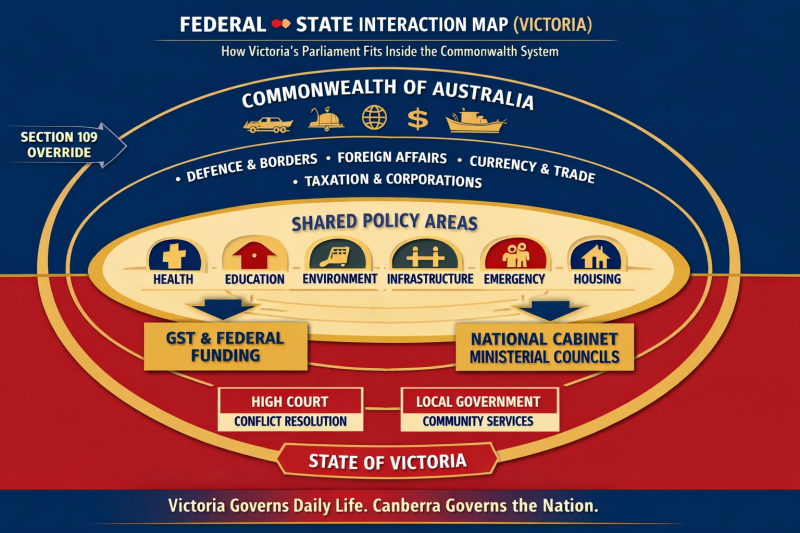
Victoria’s Parliament governs the state’s daily life — health, education, transport, justice, planning, and local government. It has two houses: the Legislative Assembly (88 MPs) and the Legislative Council (40 MPs). The Premier leads the government, and the Council reviews legislation.

How does Victoria fit into Australia’s federal system?
Victoria operates under the Australian Constitution. The Commonwealth controls national matters like defence, borders, currency, and foreign affairs. Victoria manages state services. When federal and state laws conflict, federal law overrides under Section 109.

What powers are shared between the Commonwealth and Victoria?
Shared areas include health, education, environment, infrastructure, emergency management, and housing. These require cooperation between Canberra and Spring Street to align funding, standards, and delivery.

How does federal funding influence Victoria’s policies?
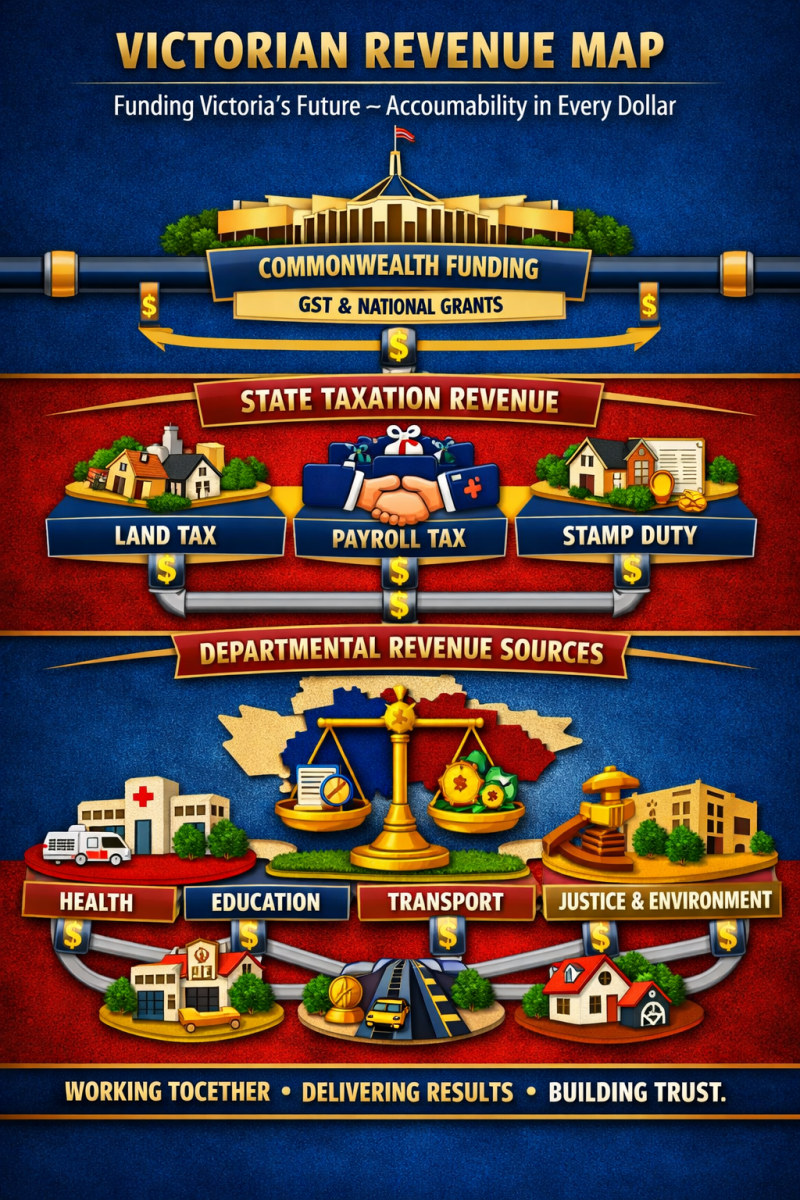
The Commonwealth provides GST revenue, national health and school agreements, infrastructure grants, and partnership payments. These shape Victoria’s priorities even in areas where the state has constitutional authority.

What mechanisms coordinate federal and state decisions?
National Cabinet (Prime Minister and Premiers) and Ministerial Councils align policy across portfolios. Intergovernmental agreements set shared standards, and the High Court resolves constitutional disputes.

How do federal politics affect Victoria?
National economic settings, immigration, energy policy, and industrial relations all influence Victoria’s outcomes. Federal election cycles and funding leverage often drive state-level decisions.

How does Victoria influence federal politics?
Victoria contributes Senators and MPs to the Commonwealth Parliament. State crises, reforms, and innovations often shape national policy. The Premier’s relationship with the Prime Minister can affect national direction.

What’s the Australians Unified view on federal–state alignment?
Australians Unified advocates for clearer boundaries, stronger cooperation, and transparent funding flows between Canberra and Victoria — ensuring accountability and efficiency across shared portfolios.

This is where our journey begins. Get to know our business and what we do, and how we're committed to quality and great service. Join us as we grow and succeed together. We're glad you're here to be a part of our story.