🛡 Australian Army
Land Power • National Resilience • Sovereign Capability • Future Ready Australia
Portfolio: Australian Army, Department of Defence
Primary Pillar: 🛡 Sovereignty
Supporting Pillars: 🚀 Future Australia • 💰 Prosperity • 🤝 Unity • ⚖ Accountability
📌 Executive Summary
The Australians Unified model positions the Australian Army as more than a land combat force.
It becomes:
✅ Australia's Land Power Authority
✅ National Mobilisation Partner
✅ Community Resilience Contributor
✅ Workforce Development Partner
✅ Sovereign Capability Enabler
✅ Regional Security Partner
✅ Infrastructure Support Partner
✅ Future Warfare Innovation User
The Army's published direction identifies four core functions:
✅ Fight and win in the littorals
✅ Strike at long range
✅ Win the close fight on, from and onto land
✅ Integrate with the ADF, allies, partners and sovereign industry. [army.gov.au], [defence.gov.au]
🎯 National Mission
Defend Australia
✅ Land Combat
✅ Strategic Deterrence
✅ Littoral Operations
✅ Long Range Strike
✅ Joint Operations
✅ Regional Security
✅ National Defence
✅ Allied Interoperability
The Army's contribution to the National Defence Strategy is built around readiness, integration and continual adaptation.
Australians Unified defence portfolio reform agenda
In alignment with the 2024 National Defence Strategy, Australia's foremost national gap is not capability acquisition, but governance, measurement, cross-portfolio coordination, and sovereign capability integration. Our policy roadmap establishes critical legislative reforms across three key tiers: amending the National Defence Act to mandate whole-of-nation readiness, legislating the National Sovereign Capability Act to safeguard fuel, munitions, and strategic stockpiles, and delivering a unified National Infrastructure Security and Mobilisation Policy. By modernising maritime, land, and aerospace governance alongside targeted workforce pipelines, Australia ensures its armed services and sovereign industries act in total unison for long-term national resilience.
Australian Army
Land power, national resilience, and sovereign capability for a future-ready Australia. Positioned under the Australians Unified Sovereignty Portfolio, the Australian Army defends our continent, strengthens domestic resilience, and innovates for modern deterrence.
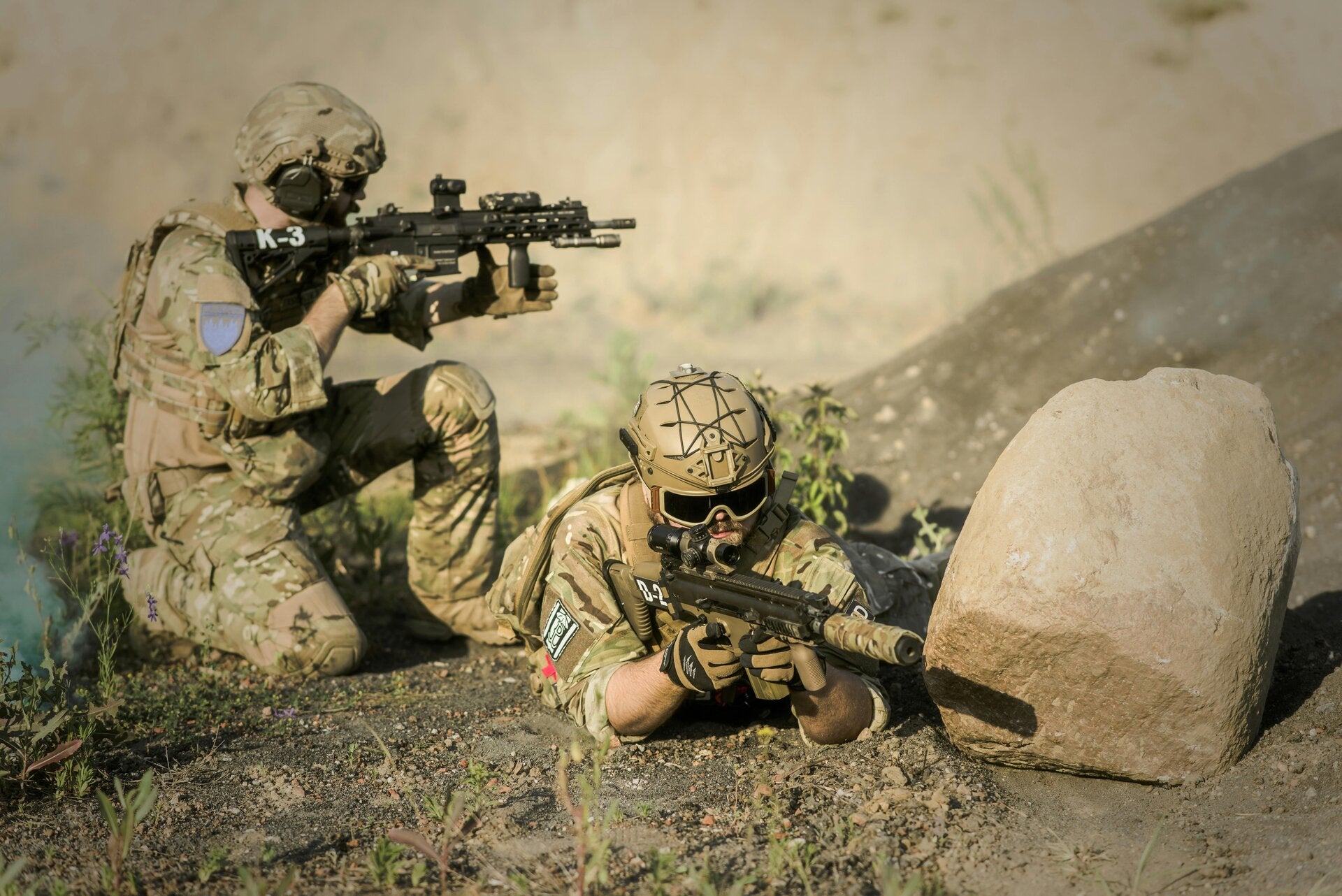
Australia's land power authority
The Australians Unified model positions the Australian Army as much more than a conventional combat force. As our nation's premier land power authority, it defends Australia across close and long ranges while serving as an indispensable national mobilisation partner and regional security anchor.

Core operational functions
Meeting the realities of modern warfare requires clear operational priorities. The published strategic direction drives four core functions: fighting and winning in the littorals, striking at long range, dominating the close fight on and onto land, and integrating seamlessly across the ADF and allied forces.

Resilience, workforce and sovereign innovation
Anchoring the supporting pillars of Future Australia, Prosperity, Unity, and Accountability, the Army acts as an enabler of domestic sovereign industrial capability. Through national infrastructure support, continuous workforce upskilling, and local innovation integration, it keeps our communities safe and self-reliant.
Australian Army critical capability gap analysis
In alignment with the National Defence Strategy 2026, the Australians Unified assessment examines core operational tasks—fighting in the littorals, long-range strike, winning close combat, and sovereign industrial integration. Below are the four most urgent critical gap areas and their targeted nationwide reforms.

Northern Australia logistics network
Current risk & gaps: Fragmented logistics infrastructure dependent on civilian systems, insufficient northern transport hubs, limited military fuel reserves, and bottlenecked ports.
AU reform: Establish a National Logistics Command, the Northern Australia Defence Corridor, strategic logistics dashboards, and civil-military transport integration.

Workforce & recruitment pipeline
Current risk & gaps: Severe shortages across engineering, cyber operations, technical trades, and autonomous systems alongside Reserve recruitment hurdles and specialist retention pressures.
AU reform: Implement the National Army Workforce Strategy, Defence Apprenticeship Program, STEM Army Pathways, and Reserve Modernisation Program.

Sovereign sustainment capability
Current risk & gaps: High dependency on foreign supply chains, limited domestic component manufacturing, reliance on overseas electronics, and vulnerable long replacement timelines.
AU reform: Legislate the Sovereign Sustainment Framework, domestic content quotas, Land Systems Manufacturing, and the Strategic Spare Parts Reserve.

Long-range strike sustainment
Current risk & gaps: Expansion of HIMARS and Precision Strike Missiles restricted by inadequate stockpile depth, domestic munitions manufacturing deficits, and depot constraints.
AU reform: Rapid Guided Weapons Enterprise expansion, sovereign missile production quotas, a National Munitions Strategy, and strategic stockpile mandates.
Four pillars of Australian Army capability
Australia’s land power depends on four connected capabilities: operating across the littorals, delivering long-range strike, winning the close fight, and integrating people, platforms, industry and partners. Together, these priorities strengthen national sovereignty, regional security and a future-ready Australian Defence Force.

Littoral operations
Build a land force able to operate from Australia’s northern approaches and alongside maritime partners in coastal environments. This includes dispersed logistics, amphibious access, surveillance and rapid support across the Indo-Pacific.

Long-range strike
Strengthen credible deterrence through precision strike, guided weapons, protected launch systems and resilient munitions stockpiles. Sovereign production, storage and sustainment are essential to maintaining readiness when it matters.

Close land combat
Equip and train Army teams to prevail in complex terrain through protected mobility, reconnaissance, communications, engineering and autonomous systems. A skilled, adaptable workforce remains central to land combat effectiveness.

Integrated national resilience
Connect Army with the ADF, allies, sovereign industry, emergency management, education and local communities. Integrated planning reinforces infrastructure, logistics, workforce pathways and disaster resilience across Australia.
Army as a national capability system
The Australian Army contributes far beyond standard combat missions. It operates as an interconnected national capability system driving regional growth, STEM development, disaster response, strategic infrastructure, logistics resilience, and sovereign industry readiness.
National capability system
Beyond defence operations, Army delivers critical domestic capability: STEM education, regional infrastructure, national disaster response, workforce expansion, sovereign supply chains, and comprehensive national emergency preparedness across Australia.
Strategic strike and littorals
Executing key priorities by mastering littoral warfare across Northern Australia and the Pacific, advancing deep strike HIMARS and precision missiles, modernising armoured fighting vehicles, and fielding autonomous AI battlefield systems.
Nation building and integration
Unifying with the Navy, Air Force, and allies while partnering with Infrastructure Australia and Emergency Management Australia to reinforce strategic transport corridors, community resilience, cadet programs, and sovereign manufacturing.
State and local affiliate architecture
A structured operational network linking state strategic coordination with grass-roots community delivery to ensure national defence readiness, sovereign resilience, and civil-military alignment across every Australian jurisdiction.
State Land Capability & Resilience Office (SLCRO)
Acting as our primary state affiliate authority, the SLCRO manages high-level defence integration across regional corridors. Key focus areas include Defence workforce planning, regional capability development, sovereign industry participation, whole-of-government emergency preparedness, strategic infrastructure coordination, mobilisation planning, and robust Army-community partnerships.
Army Community & Capability Network (ACCN)
Operating at the regional and municipal tiers, the ACCN translates national strategy into practical local outcomes. The network is delivered directly through local councils, veteran associations, secondary schools, TAFE colleges, ADF Cadet units, community organisations, and regional industry bodies to ensure seamless ground-level coordination.
Local delivery responsibilities
The network is tasked with operational community mandates that build civic strength and workforce resilience. Core responsibilities include youth and defence leadership programs, local community disaster resilience, comprehensive veteran support and transition initiatives, sovereign workforce pathways, civic emergency preparedness, and active STEM participation.
Gold standard performance standards
Both state and local affiliates report directly against our national KPI framework. Outcomes are tracked across force readiness, long-range strike integration, recruitment and engineering growth, supply chain sovereignty, and community resilience partnerships to guarantee accountable and measurable land power results.
Australian Army capability gap remediation plan, 2028–2037
A proposed $56 billion resourced implementation plan to close critical Australian Army capability gaps across northern logistics, fuel security, workforce, sovereign land systems, long-range strike, littoral operations, autonomy, reserves, community resilience and transparent performance reporting.

Priority 1–2: Northern logistics and fuel security
Priority 1 — Northern Australia Defence Corridor | 2028–2032 | $12 billion
- Lead: Australian Army.
- Support: Defence Estate & Infrastructure Australia, Infrastructure Australia, and the Northern Territory, Queensland and Western Australian governments.
- Deliver: Darwin Logistics Hub, Tindal expansion, Northern Fuel Network, strategic warehouses, military freight corridors and air-mobility infrastructure.
- Outcome: national mobilisation capability and northern force-projection capability.
Priority 2 — Strategic Fuel Security Network | 2028–2033 | $8 billion
- Lead: Defence Estate & Infrastructure Australia.
- Support: Energy Australia, state infrastructure authorities and Industry Australia.
- Deliver: strategic fuel reserves, aviation fuel facilities, defence fuel terminals and emergency distribution points.
- Outcome: fuel sovereignty and sustained operational readiness.

Priority 3–4: People and sovereign land systems
Priority 3 — Army Workforce & Readiness Program | 2028–2037 | $6 billion
- Lead: Australian Army.
- Partners: Education Australia, ADF Cadets Australia, state workforce authorities, universities and TAFEs.
- Deliver: defence apprenticeships, STEM pathways, Reserve growth programs, cadet-to-Army pathways and veteran retention pathways.
- Outcome: 30% workforce growth and reduced critical-skill shortages.
Priority 4 — Sovereign Land Systems Program | 2028–2035 | $10 billion
- Lead: Capability Acquisition and Sustainment Group (CASG).
- Partners: Defence Industry Australia, state defence industry offices and Australian manufacturers.
- Deliver: sustainment facilities, strategic parts reserves, Australian repair capability and a national maintenance network.
- Outcome: reduced foreign dependence and increased readiness.

Priority 5–7: Strike, littorals and autonomous systems
Priority 5 — Long-range Strike Sustainment Network | 2028–2034 | $7 billion
- Lead: Australian Army.
- Partners: Guided Weapons Enterprise and Defence Industry Australia.
- Deliver: missile storage, sovereign production capability, strategic stockpile facilities and sustainment systems.
- Outcome: long-range strike readiness and strategic deterrence.
Priority 6 — Littoral Warfare Infrastructure Program | 2030–2035 | $4 billion
- Deliver: a Littoral Warfare Centre, amphibious training precincts, Pacific operations staging facilities and expanded northern training.
- Outcome: regional operational superiority.
Priority 7 — Army Autonomous Systems Program | 2030–2036 | $5 billion
- Partners: Defence Science and Technology Group, defence industry and universities.
- Deliver: battlefield AI, autonomous logistics, drone capability and robotics testing facilities.
- Outcome: a future-ready land force.

Priority 8–10: Reserves, resilience and accountability
Priority 8 — Reserve Force Modernisation | 2030–2036 | $2 billion
- Deliver: a digital training platform, mobilisation framework, regional Reserve capability hubs and community recruitment system.
- Outcome: increased Reserve readiness and whole-of-nation mobilisation.
Priority 9 — Army Community & Resilience Network | 2031–2037 | $1.5 billion
- Partners: local government, schools, ADF Cadets and veteran organisations.
- Deliver: community resilience hubs, STEM and leadership programs, defence pathways and veteran mentoring programs.
- Outcome: stronger national resilience.
Priority 10 — Joint Force Accountability Framework | 2032–2037 | $500 million
- Deliver: an Army Capability Dashboard, National Defence Dashboard, Sovereignty Index, readiness scorecards, Industry Participation Index and Mobilisation Index.
- Outcome: transparent reporting and evidence-based decision-making.
Australians Unified Vision 2037
By 2037, the Australian Army becomes the Indo-Pacific's leading middle-power land force, integrated seamlessly with Defence, industry, education, critical infrastructure, emergency management, and community resilience frameworks. True success is defined not solely by combat power, but by ongoing force readiness, workforce capability, sovereign logistics, industry participation, and strategic regional partnerships that underpin Australia's long-term security, prosperity, and national sovereignty.
This strategic horizon is driven by direct alignment with contemporary operational realities: maintaining a Ready Now, Future Ready mindset; embedding continual adaptation as a core operating principle; fighting and winning in the littorals; expanding long-range strike capabilities; collaborating closely with allies and sovereign industry partners; and directly bolstering the National Defence Strategy alongside Australia's national strategy of denial.
Australian Army gold standard strategic priorities
Under the Australians Unified model and National Defence Strategy, the Australian Army drives land power, strategic deterrence, and sovereign resilience across four essential operational pillars.

Littoral operations
Fight and win in the littorals across Northern Australia, coastal defence corridors, and Pacific expeditionary deployments.

Long-range strike
Deliver precision strike missiles, HIMARS integration, joint fires, and strategic deep strike capabilities for continent-wide defence.

Future land combat
Modernise armoured fighting vehicles, autonomous drone networks, and artificial intelligence battlefield systems for the close fight.

Joint force integration
Seamlessly integrate with the RAN, RAAF, Australian Signals Directorate, sovereign industry partners, and allied regional coalitions.