💰 PROSPERITY
Building Jobs, Industry & Economic Growth
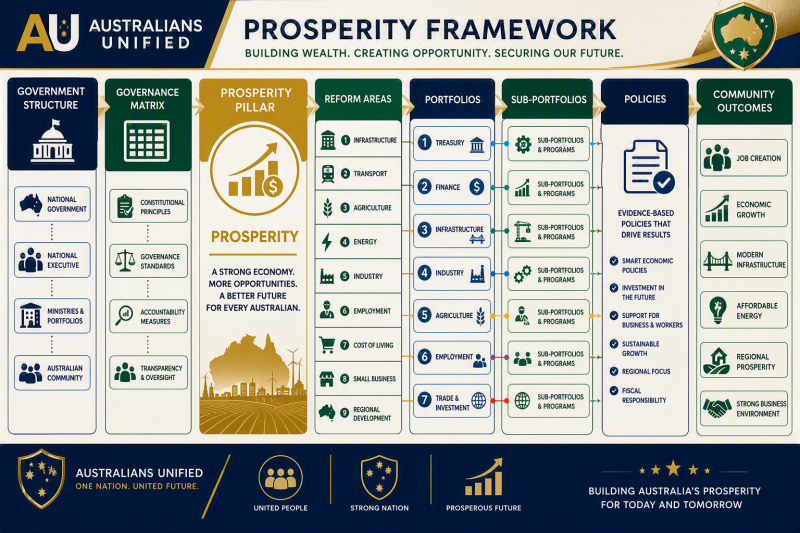
Prosperity is the foundation of a strong and self-reliant Australia. It is achieved by growing the economy, supporting industry, strengthening infrastructure, creating jobs, and ensuring communities have the opportunity to prosper.
Australians Unified views prosperity as the result of coordinated action across Federal, State and Local Government, working together to support economic growth, regional development and long-term national capability.

Federal Government
The Federal Government is responsible for national economic policy, taxation, trade, industry development and major national infrastructure investment.
💵 Treasury
Manages Australia's economy, taxation system, economic forecasting and fiscal policy.
📊 Finance
Oversees government spending, budget management and financial accountability.
🏭 Industry
Supports manufacturing, business growth, innovation, investment and industrial capability.
🚜 Agriculture
Strengthens food security, farming productivity, regional industries and export markets.
🌏 Trade
Develops international trade relationships and creates opportunities for Australian businesses.
🚧 Infrastructure
Funds and coordinates nationally significant transport, communication and infrastructure projects.

🏛 State Government
State Governments play a critical role in workforce development, infrastructure delivery and supporting economic activity within Victoria.
🚆 Transport
Develops and manages public transport networks, major roads and freight corridors.
🏗 Housing Delivery
Coordinates housing programs, planning systems and residential development.
🎓 Skills & Training
Provides TAFE, vocational education and workforce training programs.
💼 Economic Development
Supports business growth, investment attraction and regional economic opportunities.
⚡ Energy
Oversees energy systems, transmission networks and state energy planning.

🏘 Local Government
Local Government supports local businesses, communities and regional development through practical service delivery and local investment.
🏪 Local Business Support
Supports small businesses through permits, economic programs and local initiatives.
🏕 Tourism
Promotes local tourism, events and visitor economies.
🏗 Community Infrastructure
Delivers roads, public spaces, sporting facilities and community assets.
🌾 Regional Development
Encourages local investment, employment opportunities and economic growth.
🏢 Planning & Development
Supports sustainable development and local economic activity.

Key Reform Areas
🏗 Infrastructure
Investing in productive infrastructure that supports growth and connectivity.
🚛 Transport
Improving transport networks that connect communities and businesses.
🌾 Agriculture
Supporting food security and regional economies.
⚡ Energy
Delivering reliable, affordable and sustainable energy.
🏭 Industry
Strengthening manufacturing and sovereign capability.
💼 Employment
Creating pathways to meaningful employment and skills development.
💲 Cost of Living
Addressing affordability pressures facing households and businesses.
🌏 Community Outcomes
Community Outcomes
✅ Job Creation
Creating meaningful employment opportunities across Australia.
✅ Economic Growth
Supporting sustainable economic development.
✅ Modern Infrastructure
Building infrastructure for future generations.
✅ Regional Prosperity
Supporting growth beyond major cities.
Providing reliable and accessible energy.
✅ Strong Business Environment
Supporting innovation, entrepreneurship and investment.
Helping individuals and families build economic resilience.
Australians Unified Perspective
Australians Unified believes prosperity should be measured by the opportunities available to Australians. Strong infrastructure, productive industries, thriving regional communities, local jobs and long-term economic capability are essential to building a stronger future.
Prosperity is created when governments work together to support growth, remove barriers, invest in communities and strengthen Australia's productive capacity.
🔘 Related Portfolio Links
Infrastructure, Transport & Regional Development
Agriculture, Fisheries & Forestry
Employment & Workplace Relations
Energy & Resources