Local health and community wellbeing portfolio
Our mission is to support healthy, connected, safe, and resilient Australian communities. Through grassroots preventative healthcare, enhanced recreation facilities, and robust local support networks, we address the pressing challenges facing councils across the nation.

Preventative health and maternal care
Shifting from reactive treatment to proactive wellbeing is essential for thriving neighbourhoods. We focus on tackling critical workforce shortages across maternal and child health while delivering preventative care that eases the strain on hospitals and gives families early, reliable support.
Youth wellbeing and active recreation
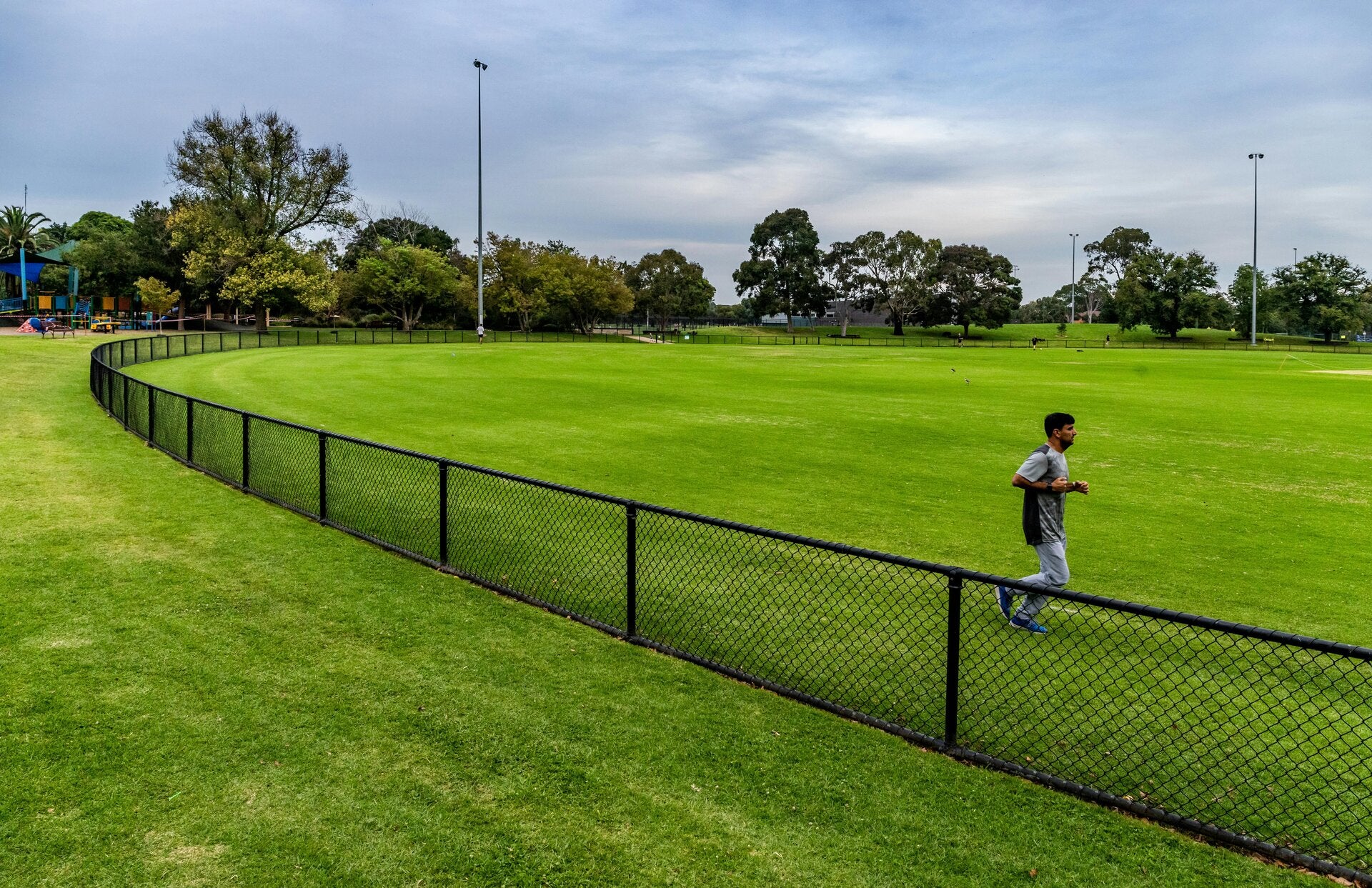
Rising mental health challenges and cost-of-living pressures require accessible, safe community spaces. By revitalising ageing local sports grounds and equitable recreation centres, councils can foster social participation, positive habits, and dedicated support for younger generations.

Ageing support and emergency resilience
Rapid population growth demands dignified care for our ageing population alongside robust local emergency recovery. We are establishing neighbourhood-led support networks and environmental health standards that reduce isolation and ensure every community remains resilient in times of crisis.
State health and community wellbeing services
The State Health & Community Wellbeing Department delivers frontline services that improve quality of life for individuals, families and communities. Its purpose is to provide accessible health, wellbeing and community support through prevention, early intervention, social connection, healthy ageing and coordinated local action. Current priorities include improving physical health, increasing preventative healthcare and participation, supporting vulnerable residents, strengthening family wellbeing, and reducing chronic disease risk.

Maternal, child and family health
Supporting new parents, infant development, early childhood wellbeing, parenting support, maternal health and child health monitoring. Success is measured through maternal health service utilisation, child health assessments and family support program participation—building healthier children and stronger family foundations.

Community connection and wellbeing
Building social connection, inclusion, community participation and volunteer networks through local wellbeing programs. These services help reduce loneliness, support vulnerable residents and strengthen community resilience, with participation, volunteer engagement and social connection tracked as key indicators.

Active living and prevention
Promoting active, healthy lifestyles through sporting facilities, walking networks, community recreation and physical activity programs. By increasing preventative health engagement and physical activity, the department aims to reduce chronic illness, prevent avoidable health costs and ease pressure on hospitals and public services.

Mental health, ageing and resilience
Providing early intervention, mental health awareness, youth support and community wellbeing initiatives alongside age-friendly communities, healthy ageing and social participation programs. Growing demand, social isolation, ageing demographics, resource limitations and inconsistent outcome measurement make coordinated, accessible support essential.
State and local wellbeing governance framework
A structured overview of roles, clear operational accountability, and data-driven oversight mechanisms across Australian public health and community wellbeing services.
Government matrix mapping
Federal Government: Responsible for Medicare, PBS, national health policy, aged care funding, and NDIS funding.
State Government: Responsible for hospitals, ambulance services, mental health services, community health programs, and regional health services.
Local Government: Responsible for maternal and child health, recreation facilities, environmental health, public spaces, and grassroots initiatives.
Shared responsibilities: Preventative health, community wellbeing, disability care, ageing support, and youth wellbeing. Healthy communities require active cooperation between all three tiers of government.
Accountability ownership matrix
Every community outcome requires a designated owner to eliminate jurisdictional ambiguity:
- Maternal and child health: State strategy & funding; local delivery & local accountability.
- Recreation programs: State strategy; local funding, delivery, and accountability.
- Community wellbeing: Shared strategy; state/local funding; local delivery; shared accountability.
- Ageing support: Federal strategy; federal/state funding; local delivery; shared accountability.
- Local health promotion: State strategy; state/local funding; local delivery & accountability.
Business operations mechanism (BOM) assessment
Current landscape: Programs operate independently across jurisdictions, local councils collect disparate data, and community health results are measured inconsistently.
Australians Unified solution: Implementing the Business Operations Mechanism introduces shared outcome measurement, transparent community health dashboards, consistent local health performance reporting, preventative tracking, and community resilience monitoring.
Key outcome and structural visibility
Establishing transparent accountability matrices and coordinated operational models ensures full visibility of what works and where public funding is most urgently needed.
By aligning local councils with state health authorities, we can bridge service delivery gaps, strengthen early intervention in regional and suburban centres, and guarantee that every Australian community achieves measurable, high-standard health and wellbeing outcomes.
Current to future: community health and wellbeing
The Australians Unified Future Outcomes Framework moves the State Health & Community Wellbeing Department from fragmented, service-based delivery to an integrated, prevention-first wellbeing system. It connects families, communities, services, workforce planning, resilience and transparent measurement—so public action is judged by healthier people, stronger families and measurable community outcomes.

Families and community connection
Current: Maternal and child health assessments, family support and local wellbeing initiatives operate alongside variable participation and growing social isolation.
Future: An integrated family wellbeing model from pregnancy to school age, with consistent inclusion, community connection and volunteer participation frameworks.
Outcome: Healthier children, earlier support for vulnerable families, stronger family foundations and more connected communities.

Prevention, mental health and active living
Current: Mental health demand is rising, early intervention is limited, and recreation facilities are often managed independently while healthcare responds after issues emerge.
Future: Community-based early intervention networks, expanded preventative mental health services and recreation integrated into health planning.
Outcome: Greater preventative healthcare participation, improved physical and mental health, fewer avoidable hospital presentations and lower long-term health costs.

Ageing, resilience and workforce
Current: An ageing population, population growth, emerging workforce shortages and uneven emergency preparedness are increasing pressure on services.
Future: Age-friendly communities, proactive support systems, integrated resilience and recovery planning, and long-term workforce capability forecasting.
Outcome: Greater independence and quality of life for seniors, reduced isolation, stronger emergency response and a sustainable, future-ready health workforce.

Connected services and accountability
Current: Programs, data and reporting systems often operate separately; service pathways are fragmented and outcome measurement is inconsistent.
Future: Business Operations Mechanism coordination, shared wellbeing monitoring, connected support pathways, public outcome dashboards and defined accountability ownership.
Outcome: Easier access to services, better local decision-making, less duplication, transparent performance reporting and greater public confidence.
Australians Unified health trajectory: a 10-year model
Australians Unified proposes a prevention-first, integrated health and community wellbeing system: moving from treating illness, funding disconnected services and measuring activity to preventing illness, planning across systems and measuring outcomes. The illustrative 10-year framework invests $38 billion to generate an estimated $61 billion in benefits—a potential net benefit of $23 billion—through modest efficiency and prevention gains.

Prevention and community health
Strategic shift: treat illness → prevent illness; fund services → integrated planning; measure activity → measure outcomes.
10-year investment: $8b preventative health and $5b community health programs, directing earlier support where people live.
Budget allocation: prevention rises from 5–8% to 15–20%, while community health rises from 10% to 15%. Hospital response reduces from 70% to 55–60% as avoidable demand falls.

Workforce and regional access
10-year investment: $4b for workforce capability planning and $7b for regional health access, supporting workforce stability and fairer service access.
Expected benefit: better workforce retention, reduced shortages and stronger regional service planning, estimated at $6b and $4b respectively over 10 years.
Budget allocation: workforce planning rises from 2–3% to 8–10%, backed by long-term capability forecasting and integrated local, state and federal planning.

Connected digital services
10-year investment: $6b for digital health integration and $1b for BOM health integration, reducing duplication and improving coordination across services.
Expected benefit: $8b from reduced administrative duplication and $5b from improved digital coordination over 10 years.
Budget allocation: digital health grows from 3–5% to 10%. Moderate integration becomes high integration, with connected pathways replacing fragmented systems and a unified public reporting dashboard.

Outcomes and accountability
10-year investment: $6b for mental health expansion and $1b for health performance dashboards. This supports early intervention, clear ownership across federal, state and local systems, and public outcome reporting.
By 2035: avoidable admissions reduce by 15–20%; emergency demand growth reduces by 10–15%; mental health early intervention delivers an estimated $8b benefit; and reduced hospital demand delivers an estimated $18b benefit.
Goal: healthier Australians, improved equity and access, stronger workforce capacity, and lower long-term system pressure without endless growth in hospital expenditure.
Local health and community wellbeing portfolio FAQ
Find answers to key questions regarding local health initiatives, community facilities, preventative programs, and how we are addressing the wellbeing needs of Australian neighbourhoods.