Explore the Australians Unified framework for economic growth, productive industry, employment, investment and future-ready infrastructure. The Prosperity Portfolio connects reform areas with government portfolios, departments and agencies so everyday Australians, businesses and regional communities can see how policy choices can support opportunity and long-term national prosperity.
The Prosperity Portfolio focuses on economic growth, productivity, workforce capability, innovation, and long-term national prosperity. Its role within the Australians Unified Governance Matrix is to create the conditions required for sustainable prosperity across Australia, ensuring individuals, families, small businesses, and regional communities thrive through tangible economic opportunity, enterprise, and purposeful development.
Regional Investment and Infrastructure: A key focus of the Prosperity Portfolio is directing strategic investment toward the infrastructure, services, and connectivity that enable every region to participate in Australia’s economic future. This includes reliable transport networks, digital access, energy systems, housing supply, and locally responsive community facilities. By strengthening regional capacity and reducing barriers to participation, the portfolio supports more balanced growth, helps businesses reach new markets, and creates lasting opportunities for communities across metropolitan, rural, and remote Australia.
Prosperity extends beyond standard economic indicators. By addressing vital challenges like cost of living, infrastructure constraints, and workforce skills gaps, this portfolio coordinates key sectors—from advanced manufacturing and agriculture to technology and trade. Through balanced governance, it safeguards strategic economic capability, turning nationwide productivity into enduring community outcomes.
Innovation and regional opportunity are also central to long-term prosperity. Targeted investment in research, digital connectivity, and local enterprise can help communities diversify their economies, attract skilled workers, and create high-value jobs closer to home. By linking innovation hubs with regional industries and supply chains, the portfolio supports growth that is both globally competitive and broadly shared.
Use these pathways to understand how the Prosperity Portfolio works within the Australians Unified Governance Matrix. Move from the big economic picture to the reform areas, institutions and community outcomes that build Australia.

Follow the Treasury-focused view of fiscal policy, taxation, economic forecasting and long-term prosperity, including key reform areas such as cost of living, tax reform and the economy.

See how industry, employment, investment and national productivity can create practical opportunities for workers, entrepreneurs and businesses across Australia.

Understand the role of infrastructure and regional development in connecting communities, supporting local enterprise and preparing Australia for future growth.
Prosperity is not a single policy. In the Australians Unified Governance Matrix, the pathway is clear: prosperity to build Australia; reform areas; government portfolios; departments and agencies; policy development; and community outcomes. This structure helps Australians engage with the decisions that shape financial wellbeing, jobs, investment, productive capacity and resilient regional communities.

The Treasury portfolio supports Australia’s economic management through fiscal policy, taxation, economic forecasting and long-term national prosperity. Explore how these foundations relate to cost-of-living pressures, tax reform and broader economic reform.
Take part in building Australia
Australians Unified is an online community project based in Melbourne, bringing Australians together around common ground and shared beliefs. Review the Prosperity Portfolio, compare its linked reform areas and join the conversation about stronger economic opportunity for individuals, businesses and communities.

💰Federal Prosperity Portfolios
Build Australia
The Prosperity Portfolio Framework brings together the departments, agencies and functions responsible for supporting economic growth, infrastructure, industry, employment, investment and national productivity.
Within the Australians Unified Governance Matrix, Prosperity portfolios focus on building a stronger economy, creating opportunities for individuals and businesses, strengthening regional communities and delivering the infrastructure needed for future growth.

💰 Treasury
Portfolio Purpose
Supporting Australia's economic management through fiscal policy, taxation, economic forecasting, and long-term national prosperity.
Related Reform Areas
- Cost of Living
- Tax Reform
- Economic Growth
- Investment
- Productivity
Community Outcomes
✅ Economic Stability
✅ Financial Security
✅ Sustainable Growth
✅ National Prosperity

📊 Finance
Portfolio Purpose
Managing government finances, public expenditure, budgeting and efficient allocation of national resources.
Related Reform Areas
- Government Efficiency
- Public Investment
- Budget Management
- Infrastructure Financing
Community Outcomes
✅ Responsible Spending
✅ Financial Accountability
✅ Efficient Government
✅ Long-Term Stability

🏗 Infrastructure, Transport & Regional Development
Portfolio Purpose
Developing and maintaining the infrastructure networks that support Australia's economy, communities and future growth.
Related Reform Areas
- Infrastructure
- Transport
- Regional Development
- Major Projects
- Connectivity
Community Outcomes
✅ Modern Infrastructure
✅ Connected Communities
✅ Regional Prosperity
✅ Economic Growth
Explore Infrastructure Portfolio →

🏭 Industry, Science & Resources
Portfolio Purpose
Supporting Australian industry, manufacturing, resources and innovation to strengthen economic capability and competitiveness.
Related Reform Areas
- Manufacturing
- Resources
- Industry Development
- Sovereign Capability
- Innovation
Community Outcomes
✅ Industry Growth
✅ Manufacturing Jobs
✅ National Capability
✅ Investment Opportunities

🌾 Agriculture, Fisheries & Forestry
Portfolio Purpose
Supporting Australia's food security, agricultural industries and regional economies.
Related Reform Areas
- Agriculture
- Food Security
- Regional Development
- Export Growth
- Natural Resources
Community Outcomes
✅ Strong Regional Communities
✅ Food Security
✅ Export Growth
✅ Sustainable Agriculture
Explore Agriculture Portfolio →

💼 Employment & Workplace Relations
Portfolio Purpose
Supporting workforce participation, employment opportunities, productivity and workplace fairness.
Related Reform Areas
- Employment
- Skills
- Workforce Development
- Workplace Participation
- Labour Markets
Community Outcomes
✅ Job Creation
✅ Workforce Participation
✅ Economic Opportunity
✅ Future Workforce Readiness
Explore Employment Portfolio →

🌏 Trade & Investment
Portfolio Purpose
Expanding Australia's trade relationships and attracting investment that drives economic growth and national prosperity.
Related Reform Areas
- Trade
- Investment
- Export Development
- International Markets
- Economic Partnerships
Community Outcomes
✅ International Competitiveness
✅ Increased Investment
✅ Export Growth
✅ Economic Resilience
Explore Trade & Investment Portfolio →

⚡ Climate Change, Energy, Environment & Water
Portfolio Purpose
Supporting Australia's energy security, environmental sustainability, water management and economic transition.
Governance Matrix Position
Primary Pillar
💰 Prosperity
Supporting Pillars
🚀 Future Australia
🛡 Sovereignty
Related Reform Areas
- Energy
- Water Security
- Resource Management
- Renewable Technology
- Environmental Resilience
Community Outcomes
✅ Affordable Energy
✅ Water Security
✅ Environmental Sustainability
✅ Economic Resilience
Explore Climate, Energy & Water Portfolio →
Public registers, disclosures, and committee oversight
Public registers and disclosures: Open access to government and council records remains essential for maintaining public trust. We provide clear pathways to key policy declarations, conflict of interest registers, official delegations, and strategic expenditure documents to ensure transparent decisions across all portfolios.
Audit and risk committees: Independent advisory committees deliver rigorous oversight across financial administration, governance frameworks, and operational risk controls. By evaluating internal procedures and regulatory compliance, these bodies safeguard ratepayer funds and reinforce integrity throughout Australian communities.
Australians Unified estimates that federal investment supporting prosperity outcomes totals between $145 billion and $218 billion annually. Discover how targeted national expenditure fuels jobs, enterprise, infrastructure, and generational economic growth across Australia.
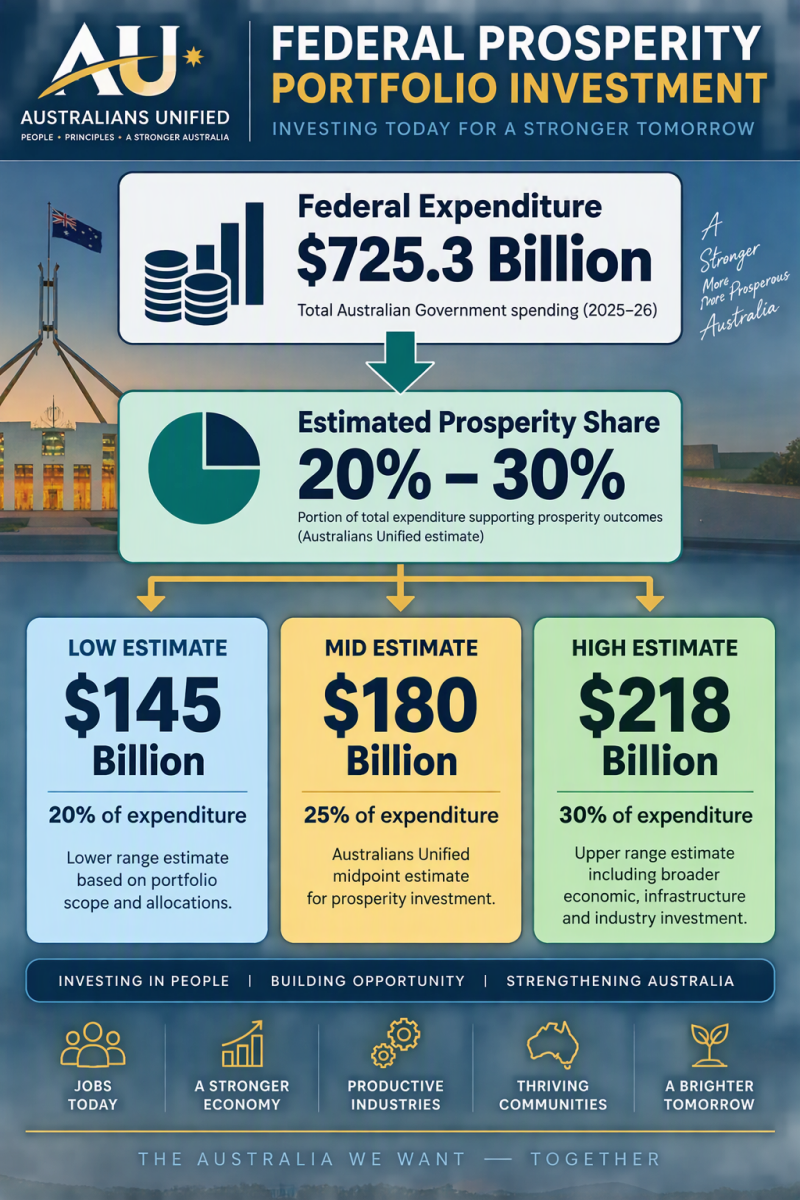
$180 billion estimated investment
Australians Unified working estimate of federal prosperity spending, representing roughly 25% of overall Commonwealth annual expenditure dedicated to long-term national economic capacity.
Priority investment areas: This spending supports the foundations of sustained prosperity, including productive infrastructure, skills and education, research and innovation, regional development, energy resilience and digital capability. By directing funding towards projects and programs with lasting economic value, the Commonwealth can strengthen productivity, broaden opportunity and help Australian communities and businesses compete in a changing global economy.
14+ million workforce participation
Direct investment into skills, vocational pathways, and modern workplace relations supporting over fourteen million Australians actively engaged in building the national economy.
Strengthening productivity and opportunity: A future-focused workforce agenda should also make it easier for businesses to adopt new technology, improve productivity, and create secure, well-paid jobs. By connecting training with emerging industry needs and helping workers adapt throughout their careers, Australia can build a more resilient economy that delivers opportunity for people in every region.
6 strategic focus areas
Targeted resource coordination focused on jobs, industry development, international trade, future skills, national infrastructure delivery, and sovereign innovation.
Regional Growth and Resilience: Aligning investment, workforce planning, and local capability development helps communities participate in new economic opportunities. This approach strengthens supply chains, supports small and medium-sized businesses, and builds resilient regional economies that can adapt to changing markets, technologies, and national priorities.
KEY TAKEAWAYS
- 💰 Estimated Federal Prosperity Investment: $145B-$218B annually
- 📊 Working AU Estimate: $180 Billion
- 🏗️ Represents approximately 25% of Federal expenditure
- 👷 Supports 14+ million Australians in the workforce
- 🚄 Drives infrastructure, industry, trade, skills and economic development
- 📈 Focused on jobs, productivity, growth and future prosperity
Australians Unified Perspective
Australians Unified believes prosperity is created through productive investment, responsible economic management and long-term planning. A stronger economy should deliver opportunities for individuals, families, businesses and communities while supporting national resilience and future growth.
Prosperity is not simply about economic output. It is about creating jobs, strengthening industries, building infrastructure, supporting regional development and ensuring Australians have access to the opportunities needed to succeed.
By connecting economic reform, government portfolios and community outcomes through the Governance Matrix, Australians Unified provides a practical pathway for building a stronger and more prosperous Australia.
Build Australia. Create Opportunity. Strengthen Prosperity. 💰🇦🇺
State Government Responsibilities
State & Territory Role
State and Territory Governments play a significant role in supporting economic development, employment, infrastructure, education and investment within their jurisdictions.
Through planning, service delivery and economic development initiatives, States help create the conditions required for sustainable growth, workforce participation and community prosperity.

Economic Development
State Governments support economic growth by encouraging investment, supporting industry and promoting business activity.
Their responsibilities may include:
- Economic development strategies
- Industry support programs
- Investment attraction
- Business development initiatives
- Regional economic growth
These activities help strengthen local economies and create employment opportunities.
State Development Departments
Support investment, economic growth, and industry development.

Employment & Workforce Development
States support workforce participation through education, training, and employment initiatives.
Their role may include:
- Vocational education and training
- Skills development programs
- Workforce planning
- Apprenticeships and traineeships
- Industry workforce partnerships
A skilled workforce supports long-term prosperity and productivity.
Education & Training Agencies
Deliver skills programs, workforce development, and vocational education pathways.

Infrastructure Investment
State Governments plan, fund, and deliver major infrastructure projects that support economic activity.
Responsibilities may include:
- Roads and transport networks
- Rail infrastructure
- Public transport systems
- Utilities and service infrastructure
- Regional development projects
Infrastructure provides the foundation for business growth and community development.
Transport Authorities
Manage infrastructure and transport systems that support economic activity and mobility.

Education and Skills
States provide many education services that support future economic opportunity.
These responsibilities may include:
- Public schools
- TAFE and vocational education
- Teacher development
- Educational infrastructure
- Skills pathways
Education helps prepare individuals to participate in the workforce and the broader economy.
Industry & Innovation Programs
Encourage business growth, entrepreneurship, and economic diversification.

Industry Development
States often work directly with industries to support growth and innovation.
This may include:
- Manufacturing support
- Technology sector development
- Agricultural development
- Tourism promotion
- Research partnerships
Strong industries contribute to jobs, investment, and regional prosperity.
Industry & Innovation Programs
Encourage business growth, entrepreneurship, and economic diversification.

Regional Development
State Governments help promote growth across regional and rural communities.
Their responsibilities may include:
- Regional investment programs
- Community infrastructure
- Business support
- Workforce attraction initiatives
- Local economic development
Regional prosperity contributes to a stronger and more balanced economy.
Regional Development Agencies
Support local growth, investment, and community prosperity across regional areas.
Community Outcomes
Effective prosperity initiatives help support:
- Employment Opportunities
- Economic Growth
- Skilled Workforces
- Strong Businesses
- Regional Development
- Infrastructure Investment
- Increased Productivity
- Long-Term Prosperity
Strong prosperity frameworks help create opportunities for individuals, families, businesses and communities while supporting sustainable economic development across Australia.
Australians Unified estimates Victoria commits approximately $28 billion annually toward direct prosperity outcomes. Explore the key financial parameters, workforce pipelines, and strategic focus areas driving long-term economic capability across the state.
$28 billion estimated investment
Australians Unified estimated annual Victorian investment contributing directly to prosperity outcomes, representing approximately 20% of state government expenditure.
Forecast workforce growth
Victoria continues to expand employment capacity through targeted education, vocational training, and industry development partnerships across regional and metropolitan sectors.
6 strategic focus areas
Targeted resource coordination focused on employment, industry growth, skills and training, major infrastructure, sovereign innovation, and regional development.
Understanding how Victoria invests in jobs, infrastructure, industry and economic growth. The Prosperity Portfolio focuses on the strategic investments and policy settings that support economic opportunity, workforce capability, productivity and long-term state prosperity within the Australians Unified Governance Matrix.
Tracking workforce participation, vocational pathways, and modern employment capacity across regional and metropolitan Victoria to build future-ready industry skills.
Evaluating statewide transport links, energy grid modernization, freight networks, and civic infrastructure that drive regional connectivity and business efficiency.
Assessing state budget allocation, sovereign manufacturing, and targeted innovation precincts designed to stimulate private investment and sustainable economic growth.
Australians Unified estimates Victoria invests approximately $21B–$35B annually in prosperity-related activities, with a working estimate of $28B supporting employment, infrastructure, skills, innovation and long-term economic opportunity across the state.

Local governments help create the practical conditions for prosperity within their communities. While councils do not usually manage national economic policy or major state infrastructure, they can support local economic activity, employment, investment, business growth and community development. Local prosperity means building vibrant, sustainable and economically resilient places where residents and businesses can participate in future opportunity.

Councils may deliver local economic development strategies, business attraction initiatives, investment promotion, tourism development and town-centre revitalisation. These programs can strengthen local economies and create opportunities for residents, entrepreneurs and established businesses.

Local roads, footpaths, cycling networks, public spaces, community facilities, recreational infrastructure and local transport connections support productivity, accessibility and liveability. Councils also guide sustainable growth through land-use planning, development approvals, urban planning, economic precincts and community infrastructure planning.

Business networking events, small-business information services, local economic initiatives, grants and incentives, and commercial development support can help local enterprises grow. Business development programs and economic strategies encourage employment, investment, industry participation and long-term community prosperity.

Councils can promote visitor attractions, cultural initiatives, regional tourism, destination marketing and community festivals that generate income, employment and participation. Community partnerships, volunteer programs, youth engagement, skills and training initiatives build the resilience needed for regional development, tourism opportunities, improved infrastructure and lasting local prosperity.
Community Outcomes
Effective local prosperity initiatives help support:
- Local Employment
- Business Growth
- Community Investment
- Economic Resilience
- Regional Development
- Tourism Opportunities
- Improved Infrastructure
- Long-Term Community Prosperity
Local prosperity creates jobs, opportunity and economic resilience while supporting future generations.
Australians Unified estimates Victorian councils invest approximately $1.09 billion to $1.63 billion annually in prosperity-related activities, with a working estimate of $1.36 billion. This investment supports local businesses, economic development, employment opportunities, tourism, infrastructure and investment attraction—helping create stronger local economies and long-term community prosperity.
The local prosperity outcomes are business growth, employment opportunity, tourism development, economic resilience, investment attraction and long-term prosperity. Together, these outcomes support economic stability by 2035, regional growth by 2045, innovation economies by 2055 and prosperous future communities.